
1
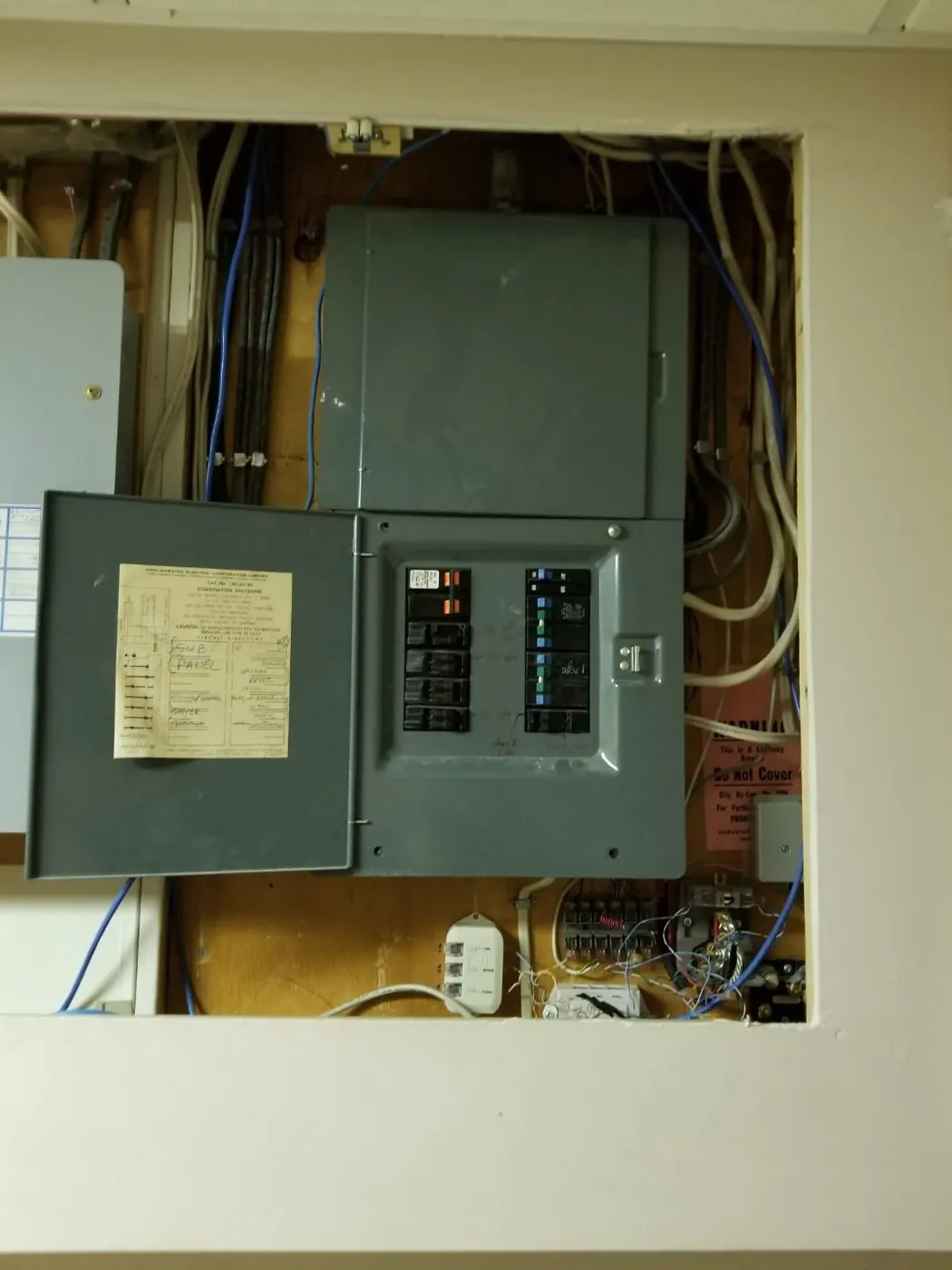
We look at your panel first
On site, not from satellite. Which circuits matter, what the panel can take, where the battery mounts. The quote comes after this, not before.
Home Battery · Edmonton · Master Electrician #13824
Powerwall 3, EP Cube, and Pylontech LFP banks. A battery ties straight into your main panel, so a Master Electrician does it. Licence #13824. 14 years on the tools.
Booking the next install window now. On-site look usually within 3 to 5 business days.
Four tiers on the battery page, each with its runtime.
See every priceRetrofit · solar you already have
Solar on its own goes dark when the grid does. A battery changes that, and it works with the panels you already have.
Step 1
Your solar inverter shuts itself off. It is built to, so it never feeds a line a crew is working on. That is why solar alone keeps nothing on.
Step 2
It opens a switch on its own and runs a small grid inside your house.
Step 3
Your inverter sees that small grid and starts producing again. It runs the house and tops up the battery while the sun is up.
There is a limit on how much solar one battery can take in an outage. I check your inverter label and size the battery to your array, or tell you straight which part of it sits out.
The kW on your inverter label or your install papers, 3 to 20 kW.
Pick the month and type what your app says your solar made.
Monthly yield per kW from Natural Resources Canada for Edmonton, south facing at latitude tilt. Same table as is solar worth it in Alberta.
Enphase also makes its own battery, and it may fit your system even better. I compare both for you.
A battery can still work with APsystems. A generator is where they draw the line: APsystems says its warranty does not cover microinverters used with a generator. Tell me up front if you want one later.
Same check either way. I read your inverter label and confirm the limit for it.
Send me a photo of the inverter label and I will tell you. Send the photo
Tesla Powerwall 3
Each unit takes up to 7.68 kW of your solar
1 Powerwall 3
13.5 kWh total storage
Or 1 Powerwall 3 plus 1 Expansion unit, with the Powerwall set to its 10 or 11.5 kW output.
FranklinWH aPower 2
Each unit takes up to 8 kW of your solar
1 aPower 2
15 kWh total storage
Or fewer units, with the solar past their limit on its own cutoff that stays off in an outage.
Worked example from each maker's published limit. Tesla allows 7.68 kW AC of existing solar per Powerwall 3 in the backup circuit, counting the smaller of your inverter's AC rating and your panel size, or 10 kW with an Expansion unit.
FranklinWH's manual caps solar at the batteries' total charging power, 8 kW per aPower 2. Final design follows your inverter label and a site visit.
Sources: Tesla system design, Tesla compatibility table, FranklinWH system manual, APsystems installer FAQ.
Retrofit · what I need to quote it
Four photos and four answers. That is everything I need to quote a battery on solar you already have.
The sticker on your inverter, or the brand in your monitoring app. It decides if your solar can run in an outage.
All the breakers, plus the label inside the door. Tells me what the panel can take.
The big one at the top. It is usually stamped 100 or 200.
One photo. I need it for the utility paperwork.
Furnace, fridge, sump, internet. Whatever has to stay on when the grid is down.
Furnace, water heater, stove and dryer. Electric heat changes the battery size a lot.
None, portable or standby, and how big. Tells me if I add the generator hookup now.
Garage, basement, utility room or an outside wall. The code limits the spot. See where it can go
Bonus: what your app says your solar made last month. It tells me the array size when the label is hard to read.
Or text the 4 photos to (780) 904-3462, or email them to info@raydnrenewables.com.
Compare the equipment before you buy
Compare backup power, storage, existing solar connections and expansion. The dashboard includes manufacturer references and shows which numbers still need a site-specific quote.
Open the battery comparisonWhere the power actually goes
Same system, three different days. Tap one.
Sunny day: the panels run the house and top up the bank
Your array covers the daytime load first, then charges the battery, then sends whatever is left to the grid as an export credit under microgeneration. Nothing is wasted and the bank is full before evening.
Evening: the house runs off the battery instead of the meter
The sun is down and the load is at its peak. The battery discharges into the house rather than you buying that power back from the grid. This is the part that shrinks the bill, not just the outage risk.
Grid outage: the house islands off the grid on its own
The transfer switch disconnects from the dead utility feed automatically and the battery carries your backed up circuits. If you have solar, it keeps charging in daylight while the grid is still out. You are not out dragging a generator into the snow at 2am.
Not sure which loads you need to carry? Open the battery calculator and tick the appliances that matter. It gives you the kWh number without a sales call.
What stays on
Runtime · battery alone, no sun
Hours equal usable kWh divided by the average load, rounded down. No sun and no generator, so this is the worst case.
| Battery | 350 W | 800 W | 2,000 W |
|---|---|---|---|
| Powerwall 313.5 kWh | 38 h | 16 h | 6 h |
| FranklinWH aPower 215 kWh | 42 h | 18 h | 7 h |
| Two Powerwall 327 kWh | 77 h | 33 h | 13 h |
| Two aPower 230 kWh | 85 h | 37 h | 15 h |
Real hours depend on what runs. With sun, solar refills the battery every day, see the 72 hour picture. Pick your own loads and see your hours.
Step 3 · configure it
Six batteries, same Master Electrician install on every one. Tap a tier, then tap what you need kept on. The summary updates as you go.
Swipe the sizes1 of 5
During an outage
Tap what has to stay on
Nothing picked yet. The summary runs on the battery calculator's 8.44 kWh essentials day: fridge, furnace fan, lights and router.
Your configuration
Canadian Solar EP Cube
9.9 kWh
Usable capacity
~12 h
On 8.44 kWh a day
Whole home overnight
Backup scope
from $5,499
Installed price
Installed prices include Master Electrician labour, permit, and inspection. Runtime is average draw over time, not peak surge.
Your final number moves with panel work, transfer switch type, and how the circuits get split. Off grid or on an acreage? We build custom LFP stacks past 27 kWh with Canadian made Discover AES. Ask about a custom build.
Under the hood · Master Electrician #13824
Swipe the steps1 of 4
On site, not from satellite. Which circuits matter, what the panel can take, where the battery mounts. The quote comes after this, not before.
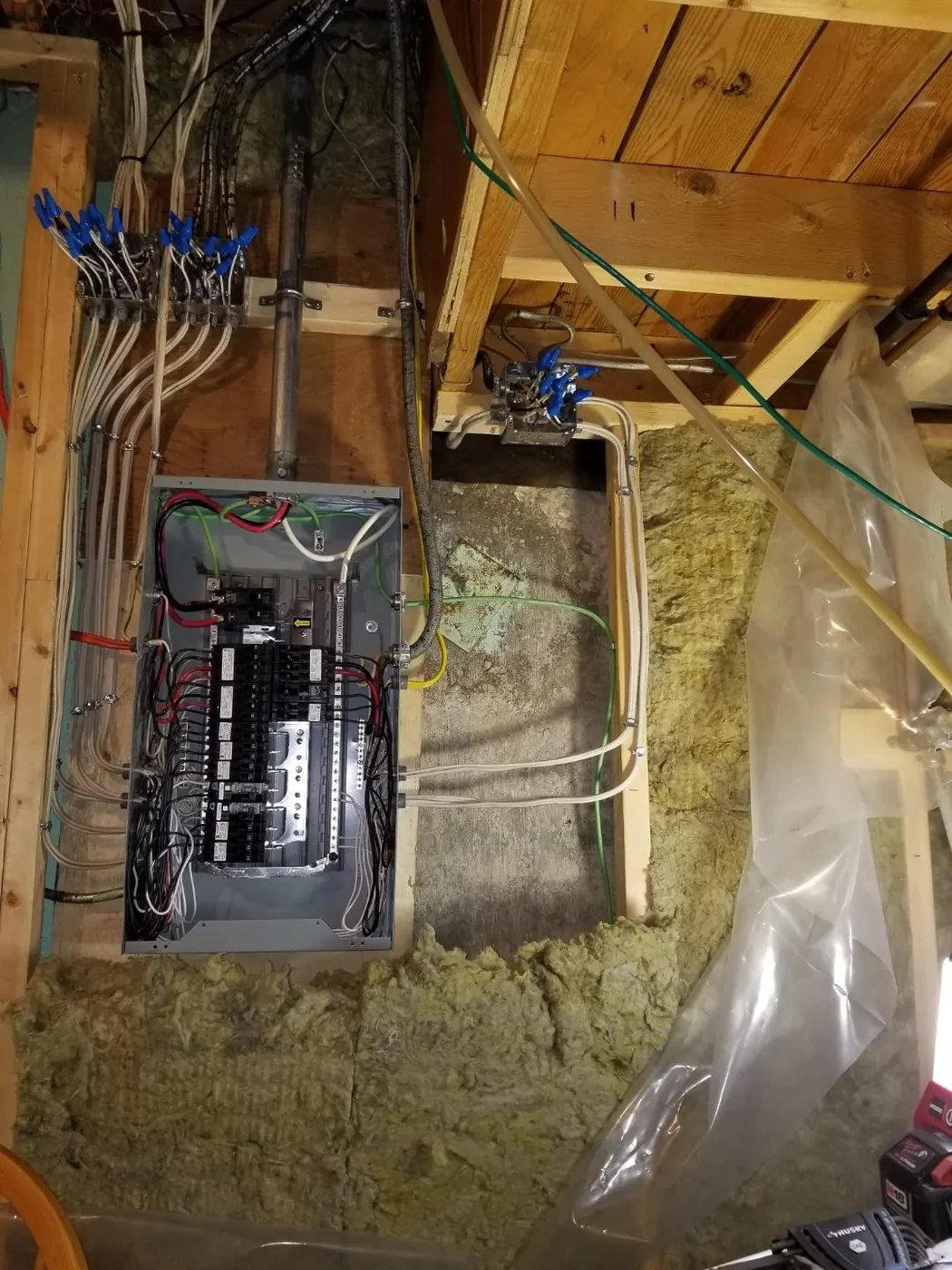
Subpanel and automatic transfer switch, so your essential circuits land on the backed up side. Same panel work whether you start at 5 kWh or 27.
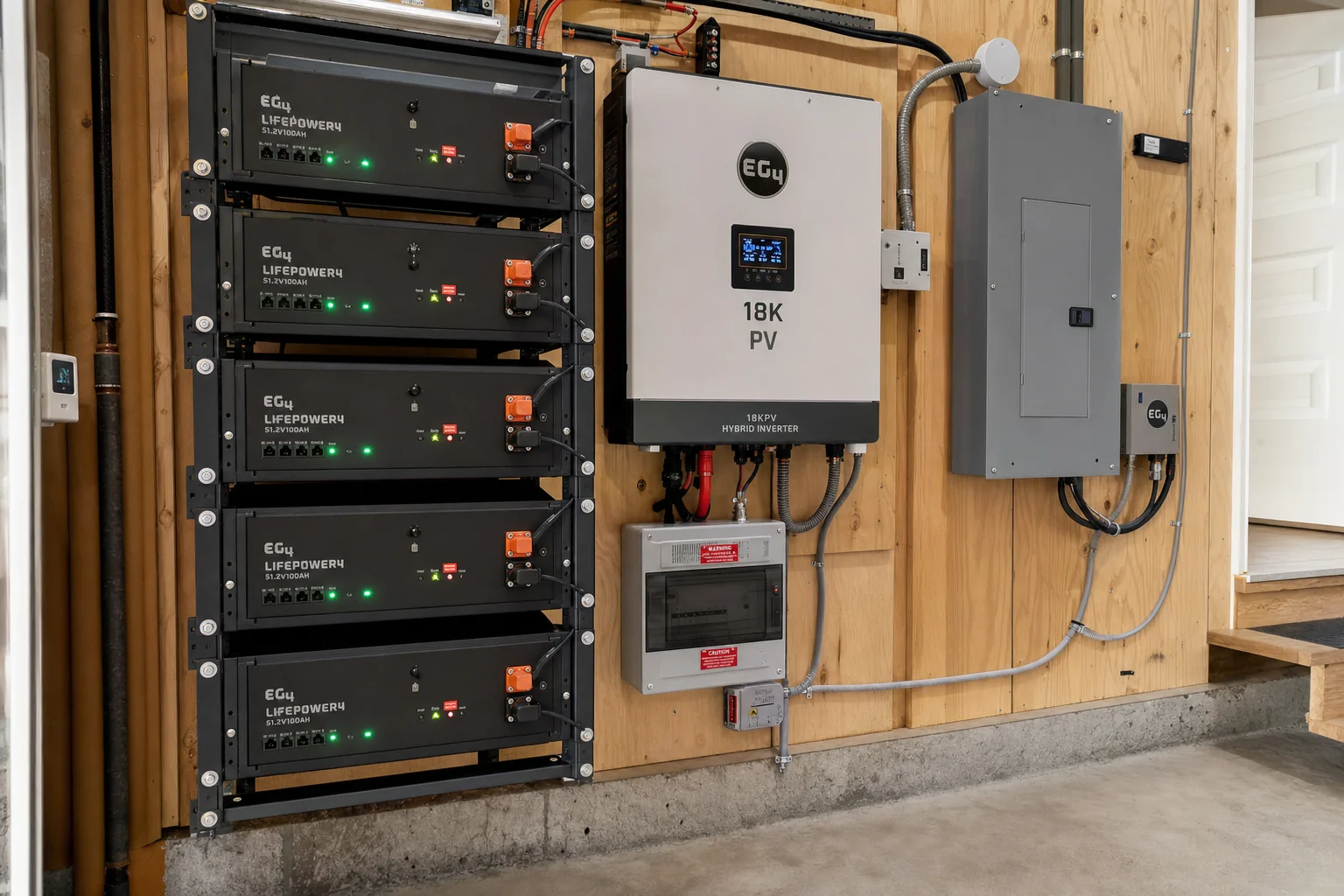
Powerwall 3, EP Cube, or an LFP rack from 5 kWh up to 27 kWh. Come back in a year and we bolt on more kWh, no tear out.
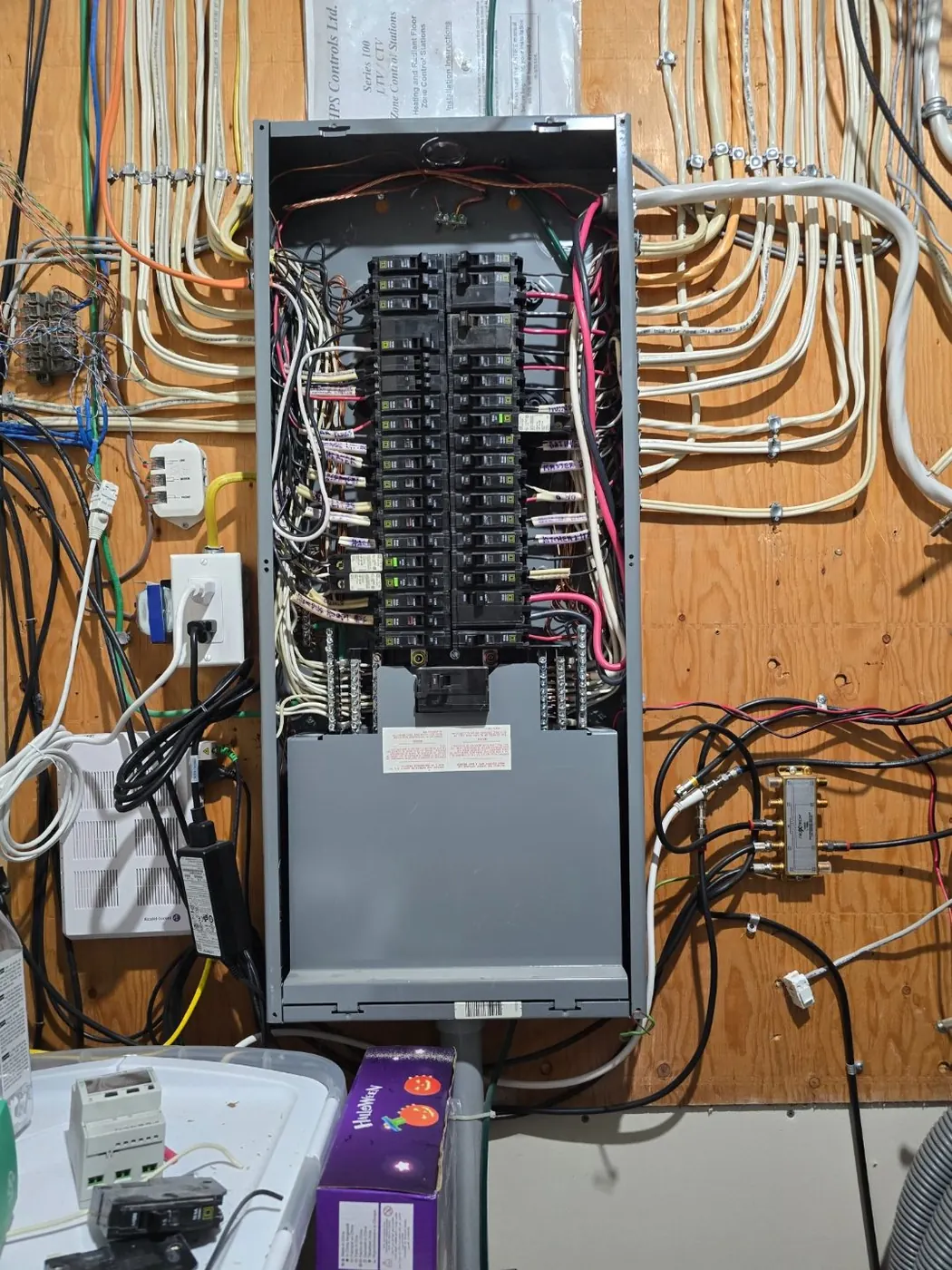
Under my Master Electrician number. You get the paperwork, not a promise.
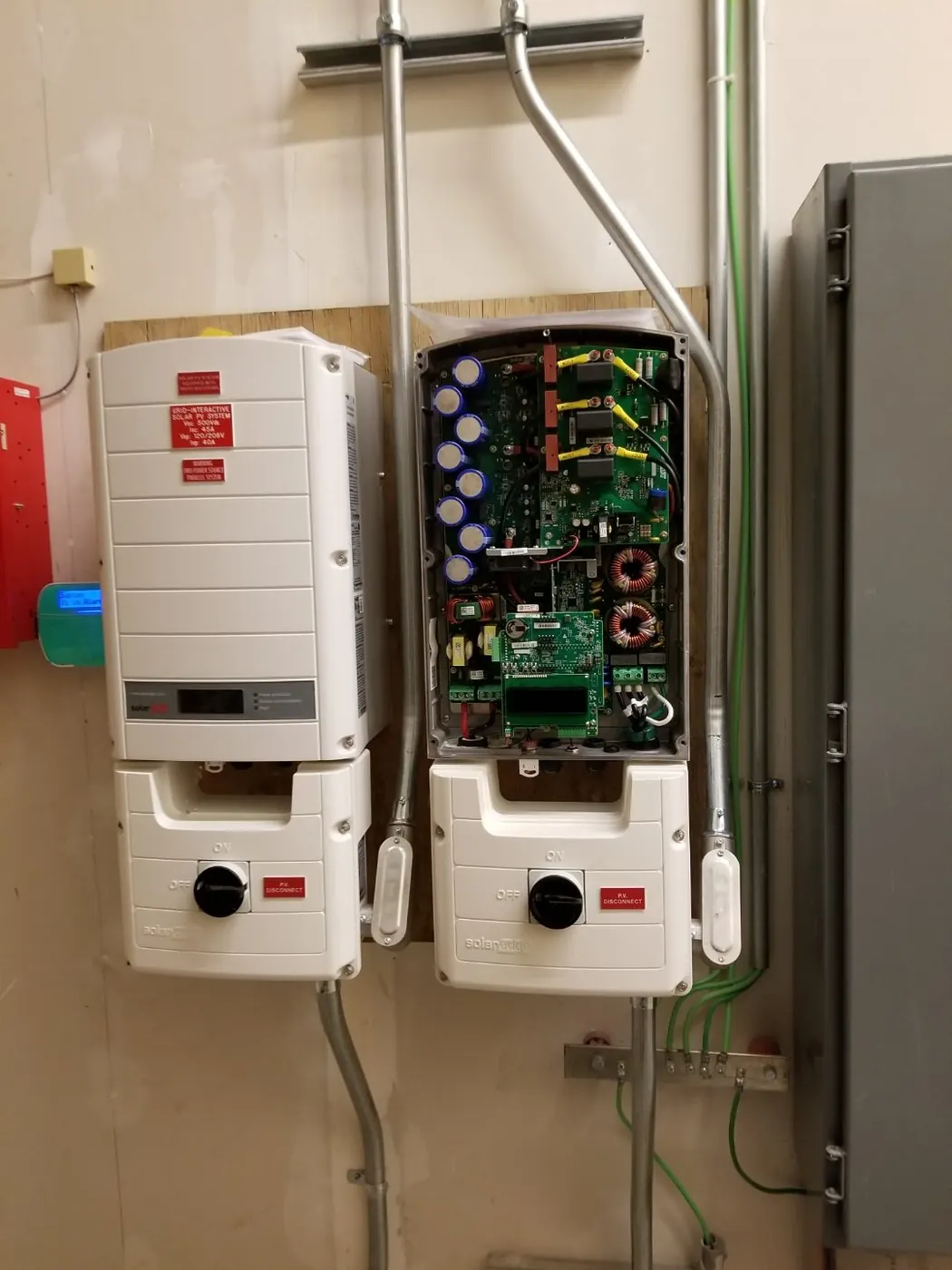
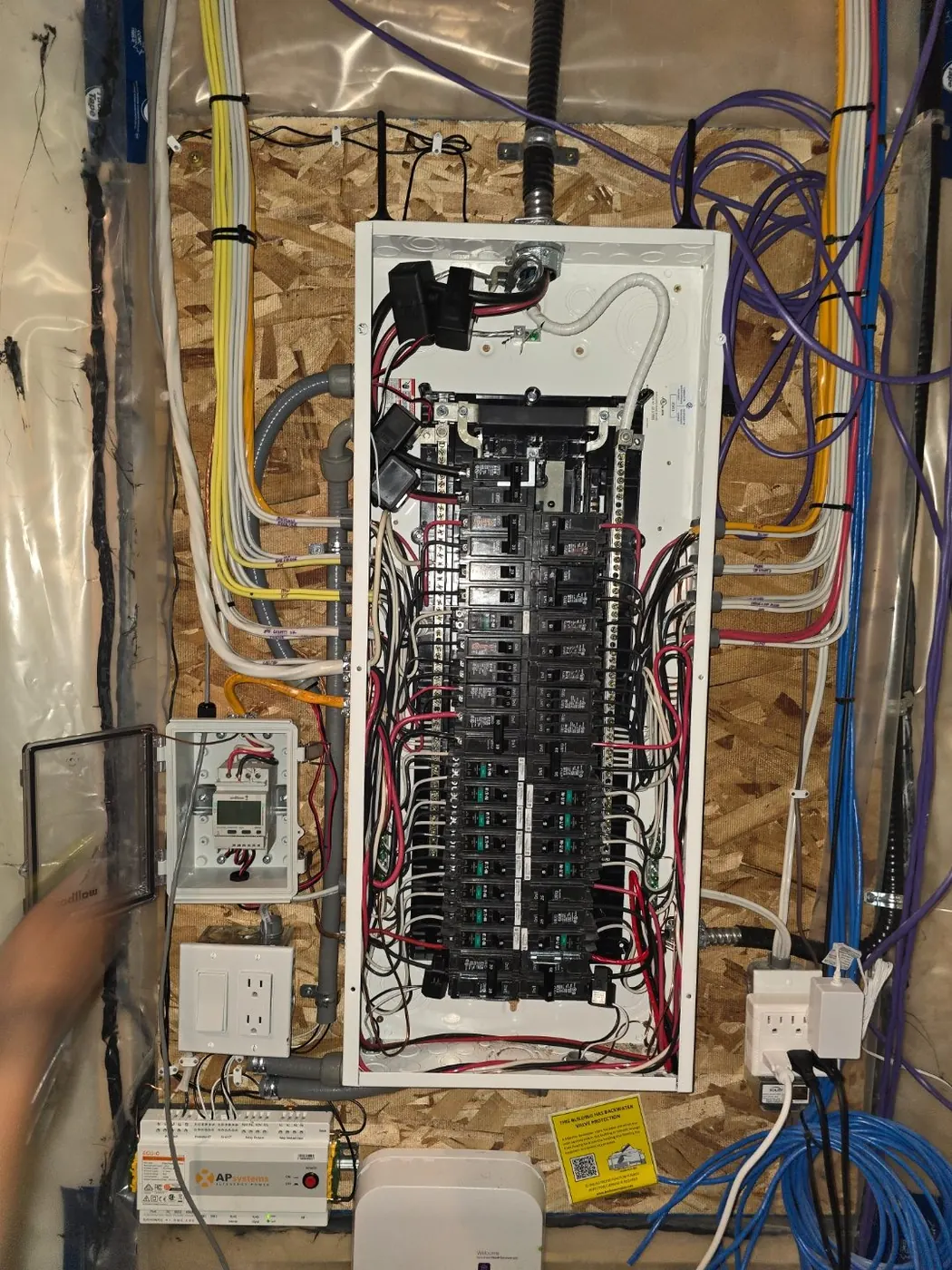

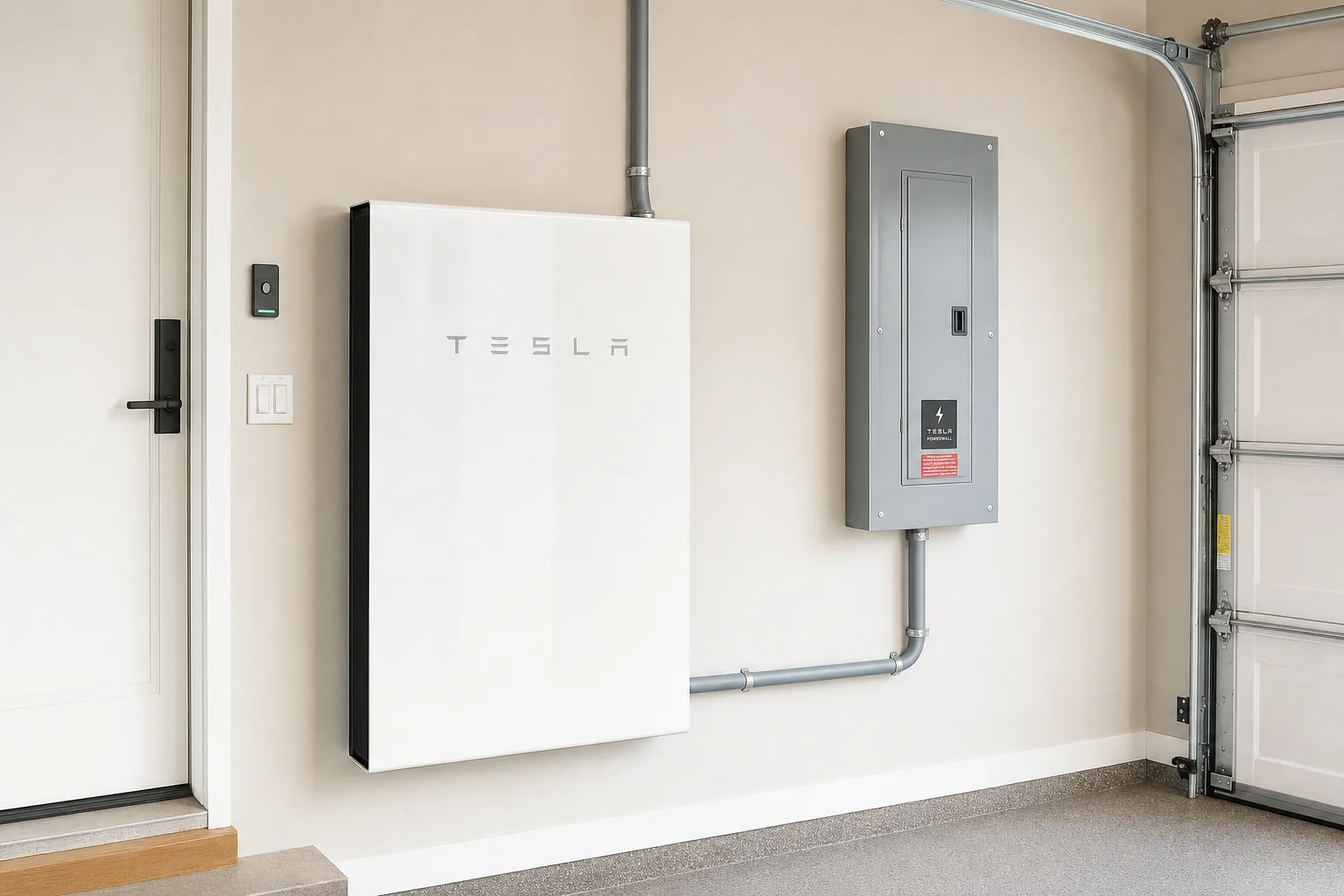
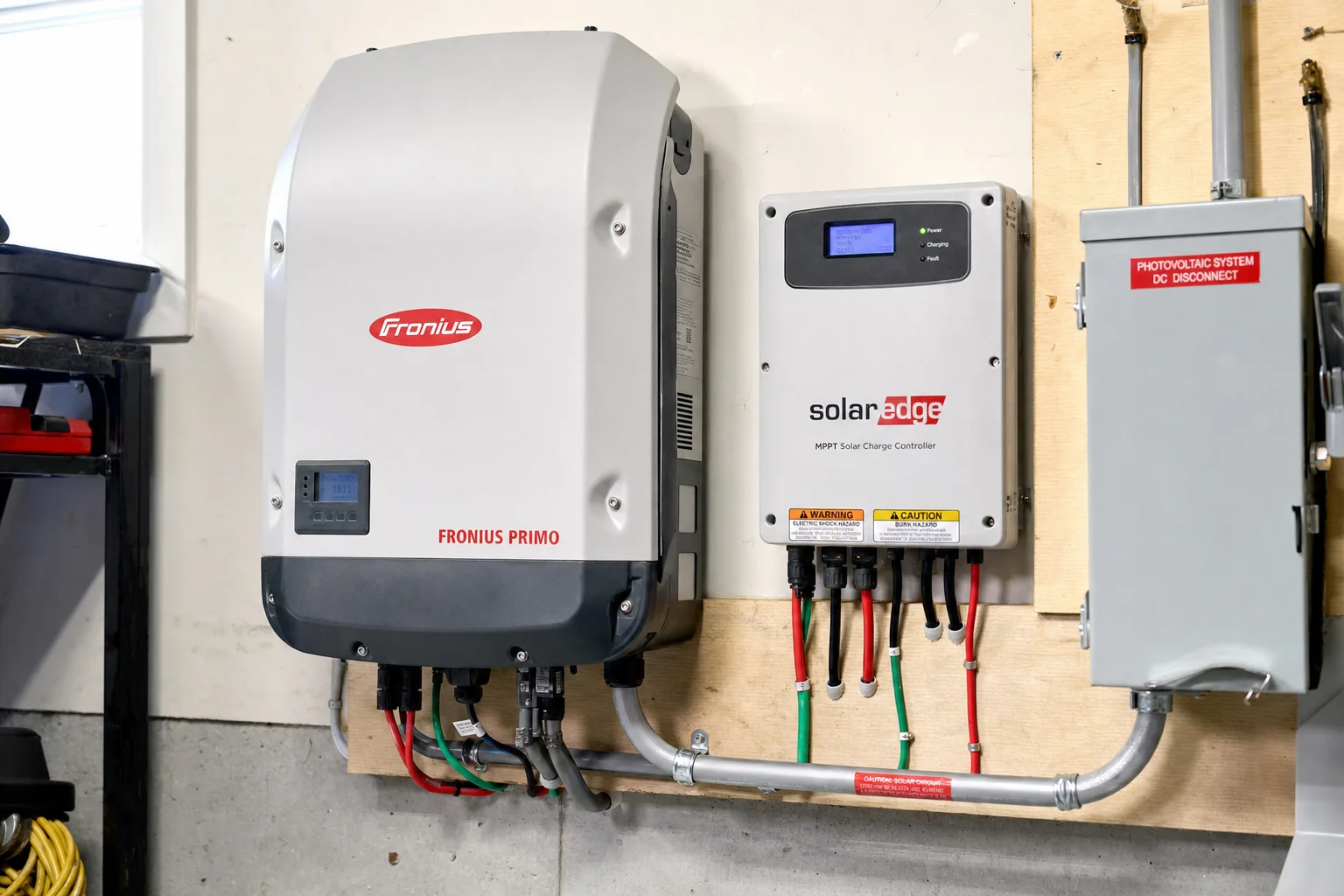
Want the kWh number before you talk to anyone? Pick your loads in the battery calculator and it sizes the bank for you.
Code · where it can go
The code lists the spots. I pick the one that fits your house on site, not off a satellite photo.
Yes
64-1100 1) a)
Yes
64-1100 1) b)
Yes
64-1100 1) c)
Yes
Drywall on the walls and ceiling, a self closing door, and a smoke alarm in the room.
64-1100 1) d) and 11)
Only if
Only in a dedicated room like the one above, or another spot the code permits.
64-1002 2) b) and 64-1100 3)
No
Not even with a tested battery.
64-1100 10)
No
Vehicle doors on a garage do not count.
64-1100 7)
CSA C22.1:24, 2024 Canadian Electrical Code
20 kWh for any one battery system. All systems together: 80 kWh, or 40 kWh in a dedicated room. A battery tested to UL 9540A can follow the maker's install instructions instead. The bedroom rule still applies.
64-1100 5), 6) and 9). Your inspector has the final say.
Paperwork
I look at your panel, your space and your inverter label.
Which battery, how many, and which circuits it carries.
Pulled under my licence, Master Electrician #13824.
EPCOR or FortisAlberta, depending on your address. Under the AUC definition, a battery that stores your solar counts as part of your micro generation unit, so I check whether your notice needs an update.
Install, inspection and commissioning. Then I run the outage test with you.
6:12pm Thursday · Powerwall 3 backup
Grid interruption
The utility feed goes dead. Every house on the block is dark. Yours is the exception.
Battery takes over
Nobody flips a switch. The battery picks up your backed up circuits on its own.
Essential circuits stay on
Fridge, furnace fan, lights, plugs. At about 800 W average you sleep through it. Two units carry the same load a full 24 hours.
Solar recharges the bank
If we paired your battery with solar, you run the house and refill at the same time. That is days, not hours. Battery on its own, you ride the outage out until the grid comes back.
0
Switches you flip
13.5 kWh
Usable per Powerwall 3
15 kWh
Per FranklinWH aPower 2
kWh ÷ kW
Long outages
A battery runs until it is empty. A generator runs as long as you feed it. Together they cover the long ones.
Hour 0
The battery takes over on its own.
Day 1 to 2
Solar refills the battery while the sun is up.
Cloudy stretch or February
It runs, refills the battery, then stops. With FranklinWH it starts and stops on its own, set by the battery's charge level.
Night 1
The battery carries the house.
Day 2
Solar runs the house and refills the battery.
Night 2
The battery again.
Day 3, cloudy
Solar makes little and the battery runs low.
Day 3, generator
The generator tops the battery up, then stops.
Night 3
The battery carries the house again.
With FranklinWH’s Generator Module the generator starts and stops on its own, set by the battery’s charge level. With a portable generator, day 3 is you starting it and switching over by hand.
Got APsystems microinverters? APsystems says its warranty does not cover microinverters used with a generator. Tell me up front, it changes the design.
CSA C22.1:24, 2024 Canadian Electrical Code
Rule 14-612
Transfer equipment for standby power systems shall prevent the inadvertent interconnection of normal and standby sources of supply in any operation of the transfer equipment.
In plain words: the switch has to make it impossible for the grid and the generator to connect to each other. That is what transfer gear is for.
Sources: FranklinWH generator guide, EP Cube, Enphase, Tesla compatibility table, APsystems installer FAQ.
Side by side
Every spec here is off the maker's own datasheet. The one that matters most here is cold. Two of these stop at −10°C, so where the battery lives matters as much as how big it is.
How cold it can run
Longer bar, colder room it can work in. Grey ones go inside where it stays warm. EG4 and Pylontech only charge from 0°C up.
Swipe for all six
Entry
4.1 to 4.56kWh usable per unit
from $2,499 installed
Modular
5.0kWh usable per unit
Priced on your walkdown
Mid
9.9 to 19.9kWh usable per unit
from $5,499 installed
Value
11.4kWh usable per unit
from $5,400 installed
Premium
13.5kWh usable per unit
from $17,999 installed
Long warranty
15kWh usable per unit
Priced on your walkdown
Specs read 30 September and 1 October 2026 from each maker's datasheet: Tesla, FranklinWH, Enphase, EP Cube, Pylontech, EG4 WallMount, EG4 LL-S. Powerwall warranty from Tesla Canada. Prices are ours. The walkdown ones get priced once I have seen your panel and where the battery will live.
Size my batteryOptions, With The Reason For Each
Battery quotes tend to arrive as one size and one price. What it should be depends entirely on how much of the house you want running.
Option 1
Best when you want the furnace, the fridge and a few plugs to ride through and you can live without the rest.
A smaller battery carries a short list for a long time. It is the cheapest way to stop losing a freezer full of food and to keep the heat on.
The circuits you leave off stay off. We pick that list together before anything is ordered.
Option 2
Best when you want nothing in the house to change during an outage.
Nobody has to ration anything or remember which plugs still work. The house behaves normally and you find out about the outage from a neighbour.
Carrying everything means carrying the big loads too, so this needs more battery and often a service that can support it.
Option 3
Best when you want the bill down and the lights on, and you are doing this once.
Solar handles the bill through net metering. The battery handles the outage. They are two separate jobs and pairing them means one permit, one crew and one trip rather than two of everything.
Doing both at once is more money in one year. It is less money than doing them two years apart.
One thing worth knowing before you compare spec sheets. The capacity number on a datasheet is a room temperature number, and an unheated garage in an Edmonton January is not room temperature. Ask any installer where they plan to mount it, and what they expect out of it at that temperature.
Price is scope, not markup
Five things decide your number. Tap any one for the short version.
Battery capacity
Biggest single lever
More usable kWh means the bank lasts longer between charges, and it is the largest line on the quote.
Overnight essentials
5 kWh
a different price class
A 5 kWh bank that carries the fridge and furnace fan overnight.
The whole house
13.5 kWh
a different price class
A 13.5 kWh unit that carries the whole house.
The 5 kWh bank is a different price class than the 13.5 kWh unit.
Stacking more modules later is cheaper than buying the biggest bank on day one, because the panel work we do for the first battery is the same work a full bank needs.
Essential load scope
You control this one
Panel and transfer work
Depends on your house
Solar integration
Changes the payback, not just the price
Install complexity
Site specific
You decide how far to take it, and the price follows the system you actually choose. We can post these prices because the electrician sets them, not a salesperson padding a commission.
No price ranges here yet. I price a retrofit off the walkdown.
One or two. The hours you want and the size of your array decide it.
The switch that cuts your house off the grid in an outage. Every backup system needs one.
Drops two big 240 V loads in an outage. Optional, and most useful on a whole home setup.
Lets a generator refill the battery. Only some systems take one.
A heated garage is simple. A cold spot can mean a heater or a different wall.
An old or full panel can need work before a battery goes on it.
The farther the battery sits from the panel, the more wire and labour.
Electrical permit, inspection, and the micro generation paperwork with your wires company.
Before you chase the lowest number
A battery is only as good as the install behind it. The low quotes shave one of these three corners, and you do not find out which one until the grid drops and you are counting on it.
Where the permit goes
Cheap quote
Permit and inspection skipped to shave the price. System is uninsurable and a problem the day you sell the house.
Raydn
Every job permitted and inspected under my Licence #13824. That row is not optional.
Who is on your roof
Cheap quote
Low bidder wins the sale, then hands the roof to whoever is cheapest that week. Warranty call goes to head office out of province.
Raydn
My own 5 person crew does every job. Warranty call comes to my cell, not a call centre.
How the size is set
Cheap quote
Number pulled off a satellite image with no site visit. Undersize and you still pay a bill. Oversize and you paid for panels that never earn out.
Raydn
I walk the roof and the panel first. The system fits the house, not the sales target.
Bring me any quote, even one that is not ours. I will read it line by line, free, and show you exactly what it left out. Audit my quote, free
Stocked in Edmonton
Edmonton warehouse stock. No drop-shipping from Texas. No six-week ocean freight from Shenzhen. Every battery in the configurator above is on the shelf or one truck ride away.
Entry tier · Pylontech
12759 149 St NW, Edmonton
15 min from downtown
Canadian master distributor for Pylontech. Physical warehouse with US5000 modules on the floor. We pick up direct.
Mid tier · EP Cube
17815 111 Ave NW, Edmonton
20 min from downtown
Authorized Canadian Solar distributor. EP Cube indoor unit and outdoor modules stocked locally year-round.
Mid tier · backup source
4703 101 St NW, Edmonton
12 min from downtown
Global solar wholesaler with an Edmonton branch. Second source for EP Cube so we are not single-threaded on one distributor.
Premium tier · Tesla
Powerwall 3 · Canadian channel
We install Powerwall 3. The units land in Canada through Tesla’s own logistics.
Flagship tier · Discover AES
6204 50 St NW, Edmonton
22 min from downtown
Canadian electrical wholesaler. Distributes Discover AES Rackmount, manufactured by Discover Energy Systems in Richmond BC. Canadian-made talking point your insurance adjuster understands.
What this means for you
Real install date the day you sign. Door-to-door companies quote batteries they’ve never touched, six-week lead, price locks before stock confirms. We don’t. If a tier is at a distributor we drive to weekly, you get a date that holds.
Size it by the hours you want, not the whole house. Hours on battery equal usable kWh divided by your average load. At 800 W, a heavy winter load, one Powerwall 3 at 13.5 kWh runs about 16 hours and two aPower 2 at 30 kWh about 37. The runtime table on this page shows four sizes at three loads.
Yes. In an outage the battery cuts your house off the grid and your solar starts producing again on the small grid it runs. Tesla publishes 7.68 kW AC of existing solar per Powerwall 3. FranklinWH caps solar at the batteries' charging power, 8 kW per aPower 2, so two have room for 16 kW. Your inverter label tells me how much of the array stays live.
Not on its own. Grid tied solar shuts itself off when the grid drops, so it never feeds a line a crew is working on. With a battery that cuts the house off the grid, your solar comes back on, runs the house and refills the battery while the sun is up.
You pick. An essentials panel carries the circuits you choose, like the furnace, fridge, freezer, sump, internet, lights and kitchen plugs. A whole home setup keeps everything live, and a load shedding module can drop two big 240 V loads so they can't drain the battery overnight.
With some batteries, yes. FranklinWH takes one through its Generator Module, EP Cube is listed by the maker as generator compatible, and Enphase needs the IQ System Controller 3G. Tesla's own table says Powerwall 3 can't charge from a generator wired ahead of it, so I check this before you pick a battery.
It comes down to hours and your array. At an 800 W heavy winter load, 13.5 kWh runs about 16 hours and 30 kWh about 37. A big array matters too. One aPower 2 has room for 8 kW of solar and two have room for 16 kW. Solar past that goes on its own cutoff and stays off in an outage.
A garage, an outside wall or a dedicated room, and the code lists the spots. Cold is the other limit. FranklinWH rates the aPower 2 to operate from −20 °C to 50 °C, so I check how cold your spot gets before I quote it.
Depends on what you’re running. Powerwall 3 = 13.5 kWh. Hours on battery = kWh divided by your average draw in kW. Tap your loads in the picker on this page, or use the battery calculator for your real number.
Yes. A battery can go in on its own and charge from the grid, then carry the house through an outage. Be clear on what it does though. Alberta has no residential off peak rate to buy low and sell high against, so on its own a battery is backup power, not a way to cut the bill. Pairing it with solar is what gives it something cheap to store.
Yes, if part of a solar system. Federal Clean Tech Investment Tax Credit: 30% refundable (eligible businesses). Residential CEIP property tax financing covers a battery only when it goes in with a new CEIP financed solar system. Adding a battery to solar you already have does not qualify. Call us to confirm what applies.
Step 5 · what happens next
I call you back
Same day, or first thing next morning. You get me, not a call centre.
I look at your panel
On site, usually inside 3 to 5 business days. Circuits, panel capacity, where the battery mounts.
You get it in writing
One number for your house, permit and inspection included. Sit on it as long as you want.
Pair it to a solar system
Solar only
Leaks
Exports for pennies, you pay retail at night.
Battery only
Shifts
Backup covered. Bill lower, not gone.
Solar plus battery
$0
Panels fill the bank, bank runs the house.
Your battery, panel, and any wiring it needs go in under one crew. No subcontractor showing up to finish someone else's work.
The open door
The owner runs the same system on his own Edmonton roof, live since 2022 with zero panels down. Come climb the ladder and inspect it yourself before you decide anything. No pressure, no obligation.
Book an inspection · (780) 904-3462