Generator transfer switches · Edmonton & Alberta
The generator is the easy part. The switch is what fails.
Inlet, interlock or a full automatic transfer switch. Canadian listed hardware that passes inspection, permit pulled under our licence.
- Master Electrician #13824
What it costs
- Interlock kit$450 to $900Panel specific, CSA listed. Manual switch over.
- Manual transfer switch$900 to $1,900Dedicated essentials sub panel. You pick the circuits.
- Automatic transfer switch$1,600 to $3,800Whole house coverage. Switches over on its own.
Starting estimates, installed. City permit included.
Build it yourself
Tick what you want running when the power drops. The switch picks itself.
Almost every generator conversation starts at the wrong end, with a generator. Start here instead. What you want alive during an outage decides the switch, and the switch decides the price.
What has to stay on?
Show the seven bigger loads. Water heater, range, air conditioning, EV charger and the rest
0watts running
Nothing ticked yet. Start with the furnace fan, it is the one that matters in February.
Tick a box above
Every combination lands in one of three switch classes. Tick a few and watch which one it turns into.
- Generator class this needsNot yet
- Circuits moved0
- Critical loads subpanelNot yet
- Starting surge headroomNot yet
Worked example, not a measurement of your house.
- The wattages above are typical running figures for common appliances, put here so you can see how the total behaves.
- Your real numbers come off the nameplates on your own equipment, and I read those on the site visit.
- Motors also draw several times their running watts for the first second, which is what the surge line is about.
Before I explain anything, here is the work
A transfer switch is a second enclosure fed off your service. I have been doing that part for 14 years.
Want the switch sized properly for your house?
Send your panel details and what you need running when the power drops. You get the right switch, the permit path and a price.
Options, With The Reason For Each
Three ways to keep the lights on
A transfer switch is not one product. What you should buy depends on who is home when the power goes out and how much you want to think about it.
Option 1
Manual transfer switch
Best when somebody is usually home during an outage and you do not mind going outside to start the generator.
Simplest install, fewest parts, least to go wrong. You pick the circuits you want to carry and you switch them over by hand.
It does nothing while you are at work or away. The furnace sits off until a person flips it.
Option 2
Automatic transfer switch
Best when you travel, you have a sump pump, or the house is empty during the day.
It senses the outage and switches over without anybody touching anything. That is the difference between a wet basement and a dry one when you are three hours away.
More equipment and more commissioning, and the generator needs its own yearly service to be worth having.
Option 3
Battery instead of a generator
Best when you want no fuel to store, no noise, and nothing to pull start at two in the morning.
A battery carries the same critical circuits with nothing to start and nothing to fill. It also does something a generator never will, which is pair with solar so it refills itself.
A generator runs as long as you keep feeding it. A battery runs until it is empty. On a multi day outage that difference is the whole argument.
Tell us which circuits you actually want carried and how long you need them, and we will tell you which of the three fits.
5.0 on Google
Two reviews. One of them was an outage.
Swipe sideways for 1 more →
The part nobody tells you
Half the transfer switches sold online cannot legally go on a Canadian house.
- Transfer switch equipment is built to one standard across three countries, and that standard carries a clause that only bites in Canada.
- Same box, same amps, same voltage, and one of them gets refused at inspection. Here are the three things I read off a nameplate before I will install anything.
-
Is it a Canadian listed model?
US and Canadian versions of the same switch sit next to each other on retail sites. The model number is usually the only difference you can see.
GoodModel carries a Canadian suffix, for example the Generac RXSW200A3CUL rather than the plain US part number.
StopUS only part number. It will physically fit and it will still get written up.
-
Does the nameplate cite the right standard?
Automatic switches and manual transfer panels are covered by two different documents. The nameplate tells you which one the manufacturer built to.
GoodAn automatic switch listed to CSA C22.2 No. 178.1, or a manual transfer panel listed to No. 178.2.
StopNo Canadian certification mark at all, or a marking you cannot find on the certifier's register.
-
Is it marked optional standby?
This is the one that catches people. It is not a marketing word, it is a grade inside the standard, and the cheapest imported units are frequently built to it.
GoodEmergency or legally required standby grade, or a Canadian service entrance rated unit.
StopOptional standby. Not permitted here, in plain words, in the standard itself.
Read a real nameplate with meThe exact numbers I check, off a switch we actually install
This is a service rated automatic switch that is listed for Canada. Every figure below is off the manufacturer nameplate, not an estimate.
- ModelGenerac RXSW200A3CUL
- Service rating200 A
- Voltage120/240 V, 1 phase
- Poles2 pole, solid neutral
- Capacity48000 W
- EnclosureNEMA 3R aluminum
- TransitionOpen, RXS series
- Wire range250 MCM to 6 AWG
- Size13.5 in W, 6.3 in D, 30 in H
- CertificationcUL and UL Listed
Two things that matter on this one. It is 2 pole, so it does not switch the neutral, which means the generator feeding it has to be a floating neutral unit. And because it is service rated it can sit between the meter and the panel, which is the only place a whole house switch belongs. A 3 pole switched neutral version needs the generator neutral bonded to its frame and a 6 AWG green bond back to the grounding electrode instead.
- Nameplate figures from the Generac RXSW200A3CUL listing at Gescan, read 2026 08 20. Neutral bonding requirement from the portable generator safety bulletin.
- I do not print prices for this hardware because distributor pricing moves and I will not quote a number I have not costed for your job.
“In Canada, automatic transfer switches built to the optional standby requirements of this standard are not permitted. In Mexico and the United States, this requirement does not apply.”
CSA C22.2 No. 178.1:22, Transfer switch equipment, fourth edition, Clause 1.6. Published scope read at CSA Group, 20 August 2026. Read it yourself before you buy anything, from me or from anyone.
So what do we actually put in, and why that one
For most whole house work in and around Edmonton we standardise on the Canadian service entrance rated Generac RXS series, the 100 A and 200 A units whose part numbers end in CUL. The 200 A version is published as 200 A, 120 volt to 240 volt, single phase, two pole, NEMA 3R aluminum enclosure, and the distributor sheet describes the series in plain words as open transition (GEScan product listing, read 20 August 2026).
That last word is the whole reason we picked it. Open transition means the switch breaks the utility connection before it makes the generator connection, so the two sources are never live together, not even for a fraction of a second. See the next section for why that single behaviour decides how much paperwork your job carries.
Not a hardware religion. If you already own a switch and it clears the three checks above, I will install what you own. If it does not, I will tell you before I take a deposit, not after an inspector does.
One behaviour, two different jobs
Whether your switch overlaps the two sources for a millisecond decides how much paperwork you carry.
- This is the technical fork in the road, and it is the one a handyman quote never mentions. It is not about quality.
- It is about whether your generator is legally capable of touching the utility grid, because the moment it is, an entirely different section of the code applies and the utility has to be told.
Open transition. Break before make.
The utility contact opens first. Only then does the generator contact close. There is a short gap where the lights are off, and that gap is the entire safety argument. The two sources are never joined, so the generator can never push power back down the line at a lineman working on it.
- Permit and inspection. Normal residential path.
- No separate utility generation filing for the vast majority of homes.
- You notice a blink. That is the whole downside.
Closed transition, or anything grid parallel.
Both contacts are closed at the same instant so the transfer happens with no blink at all. To do that, the generator has to be synchronised with the grid, which means for that instant it is connected to it. Now you are not a standby customer, you are a power production source.
- Section 84 of the code applies instead of the standby rules.
- A disconnecting means that opens every ungrounded conductor at once, per Rule 84-022.
- That disconnect has to be readily accessible, per Rule 84-024.
- The utility gets notified. Inspectors send that notice even where the system is programmed never to backfeed.
- Rule numbers, wording and the notification practice above are taken from a published Canadian inspection authority bulletin on Section 84 interconnection: Safety Bulletin 84-01-19, read 20 August 2026.
- Your job is inspected in Alberta, so the Alberta authority has the final word on your install. That is a conversation I have with them, not one you should have to have.
The rule of thumb I use on site
If the switch design makes it possible for the generator breaker and the utility breaker to be closed at the same time for any interval, even a make before break transfer measured in milliseconds, I treat it as an interconnection job and route it that way from the start. Not halfway through.
Same logic runs the other way, and it is why this page exists on a solar company's website. A battery with grid tie capability is already a power production source. If you are thinking about a generator because of outages, read home battery backup too. Sometimes the honest answer is that you want a battery and not a generator, and I would rather say that out loud than sell you the thing this page is about.
The job, in the order it happens
Five things happen between your call and a labelled inlet. Tap any one.
Nobody hands you this before they quote, so here it is. Every stage below has a why it matters and something you can go check yourself today, for free, without booking anything.
Tap any step.

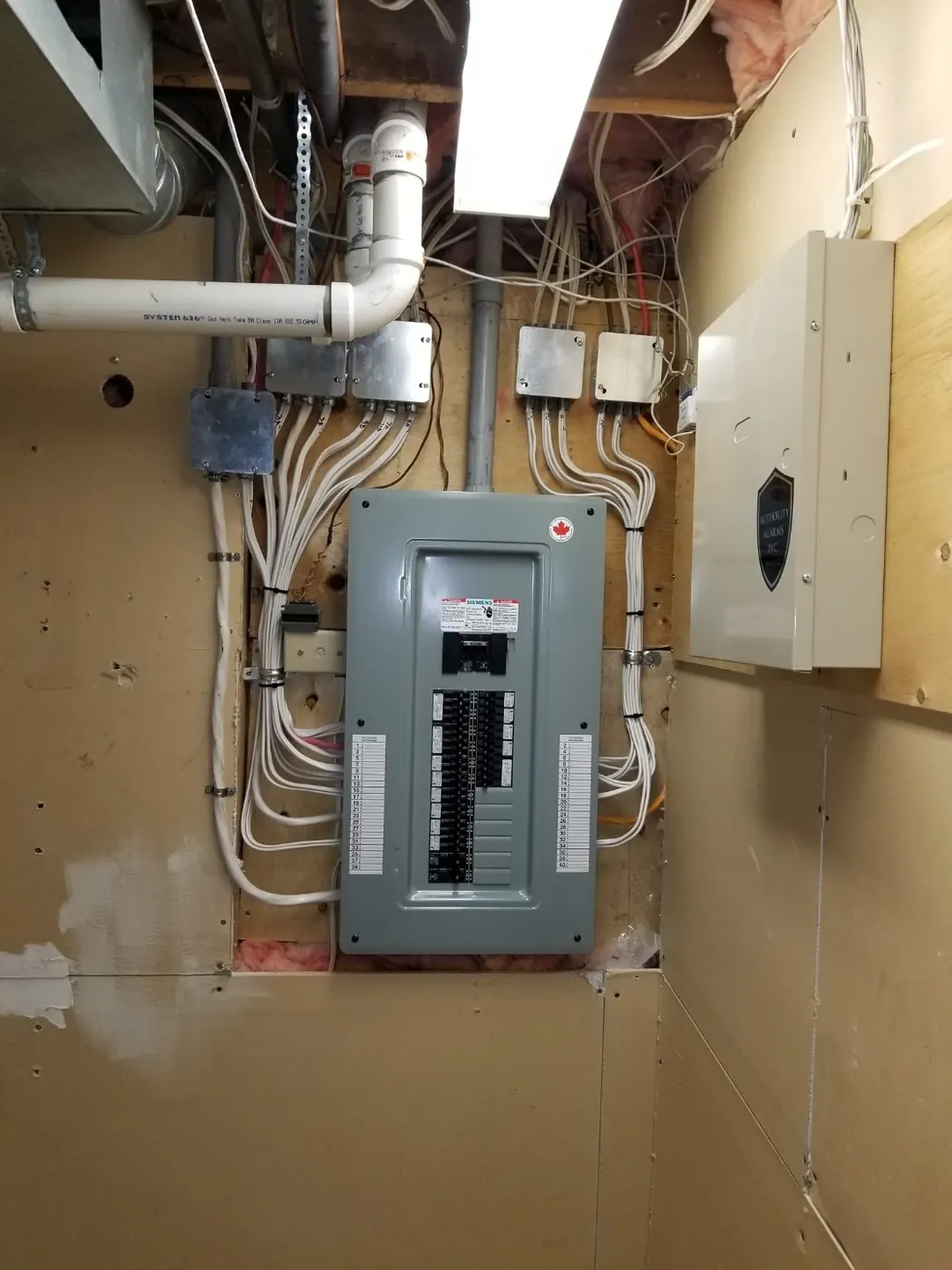
We start at your panel, not at a generator catalogue
I read what your service actually is and how full the bus already is, then we go through the same list you played with above, except with your own nameplates instead of typical figures. That conversation decides the switch class. The switch class decides the price.
Why it matters.
- A generator bought before anybody looked at the panel is the single most common way this job turns into two jobs.
- The unit shows up, the switch it needs will not fit the service it is landing on, and now there is a panel upgrade in the middle of what was sold as a one day install.
What you can do right now.
- Open your panel door, read the number stamped on the main breaker, and count the empty slots. Photograph the door and the inside.
- Send me those two photos and I will tell you over the phone which of the three classes you are in, before anyone charges you for anything.
The switch gets checked against the three Canadian tests
Every piece of transfer equipment gets run through the three nameplate checks further up this page before a purchase order goes out. Canadian listed model, correct product standard, and not built to the optional standby grade the standard bans here.
Why it matters.
- An interlock kit is the place this gets improvised most often, because a bracket is a bracket to look at. It is not.
- The kit is certified against one specific panel, and a bracket that merely fits is an unlisted modification to a certified enclosure.
- That is a deficiency written against your address, not against the person who installed it.
What to ask any quote.
- Ask for the model number of the switch or interlock kit in writing, before you pay a deposit. Then search it yourself.
- If the part number has no Canadian suffix and no Canadian certification mark, you have found out something useful for the price of two minutes.
Your generator's neutral decides how the switch gets wired
Portable generators come two ways. Some bond the neutral to the frame, some leave it floating. The switch has to match, and getting this backwards is invisible on a walkthrough because everything still turns on.
Why it matters.
- Mismatch it and you either create a second grounding point where there should be one, or you leave a system with no established bond at all. Neither one trips a breaker.
- Both change what happens to a person touching a metal enclosure during a fault, which is the entire reason the rule exists.
What to look for on your own generator. Search your generator's manual for the words floating neutral or neutral bonded to frame. It is usually one line in the specifications. Bring me that line and half of this stage is already settled.
The inlet goes outside, labelled, with the plug facing the right way
The inlet is the box you plug the generator into, and it lives outside where the generator lives, because a generator never runs in a garage. It gets permanently labelled for the generator type it is built for.
Why it matters.
- The label and the plug orientation both look like fussy details until you picture the next person.
- Someone standing in the cold at eleven at night, in a year you have forgotten this install happened, deciding whether the cord in their hand belongs in that box.
- The label is the answer to that question.
Something worth deciding early.
- Walk outside and pick the wall you would actually stand at with a running generator, in January, in the dark.
- Distance from that spot to your panel is one of the real cost drivers on this job, and you are better placed to choose it than I am.
Permit, inspection, and paperwork with a licence number on it
The permit goes in under Raydn's contractor licence, not under your name. An inspector looks at the work. The panel directory gets reprinted so the next person can read which circuits are backed up and which are not.
Why it matters.
- Edmonton's own wording is broad on purpose. An electrical permit is required to
install, alter or add to an electrical system
, and a transfer switch is squarely inside that. - So a permit is being pulled either way. The only real question is whose licence is carrying the risk when an inspector finds something.
How to check any contractor, including me. The city publishes both the requirement and the rule that contractors have to be licensed with them: City of Edmonton electrical permits. Read it before you sign a quote from anybody.
The comparison a generator company will not print
A generator is not always the right answer. Here is the honest split.
We install both, which is exactly why we can say this out loud. Read the row that matches your situation and back your own decision instead of ours.
Show the other three rowsCold weather, whether it earns anything, and best fit
Want the other side of this in detail? Home battery backup covers what a battery actually holds and what it costs to hold it. Off the grid entirely, with no utility service to transfer away from? That is a different design again, and it lives on off grid cabin power.
What this page does not have, and why I am telling you
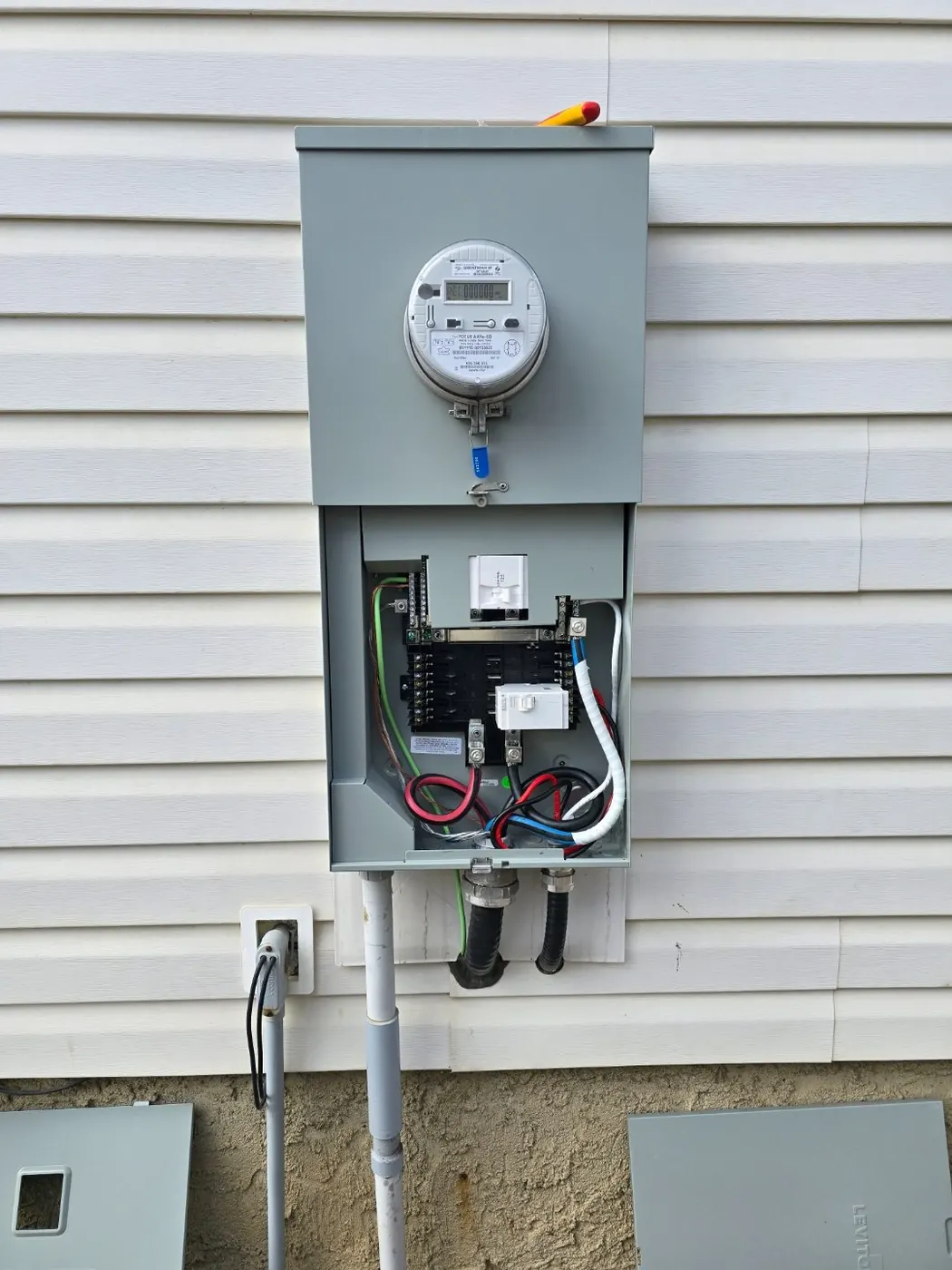
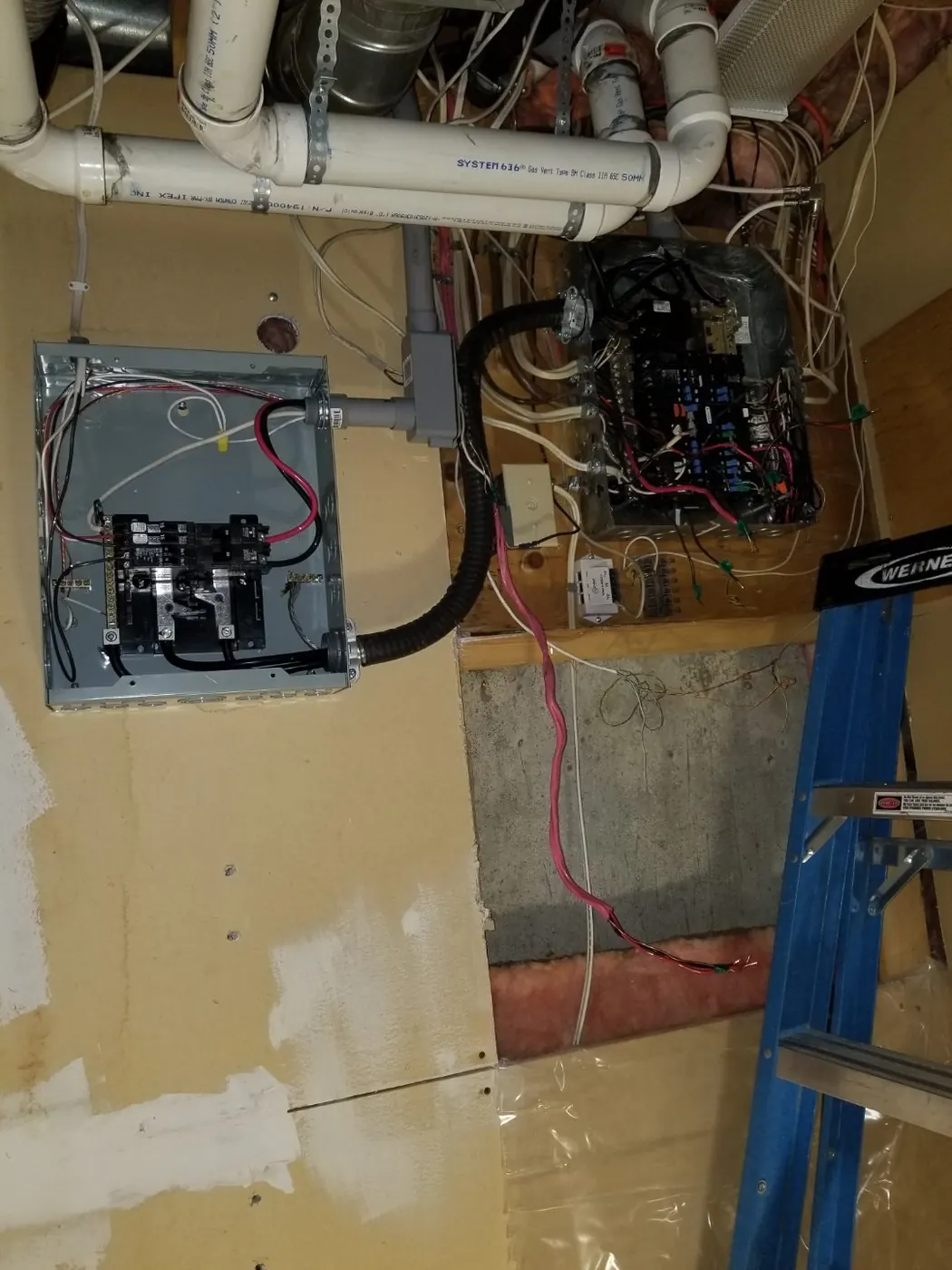
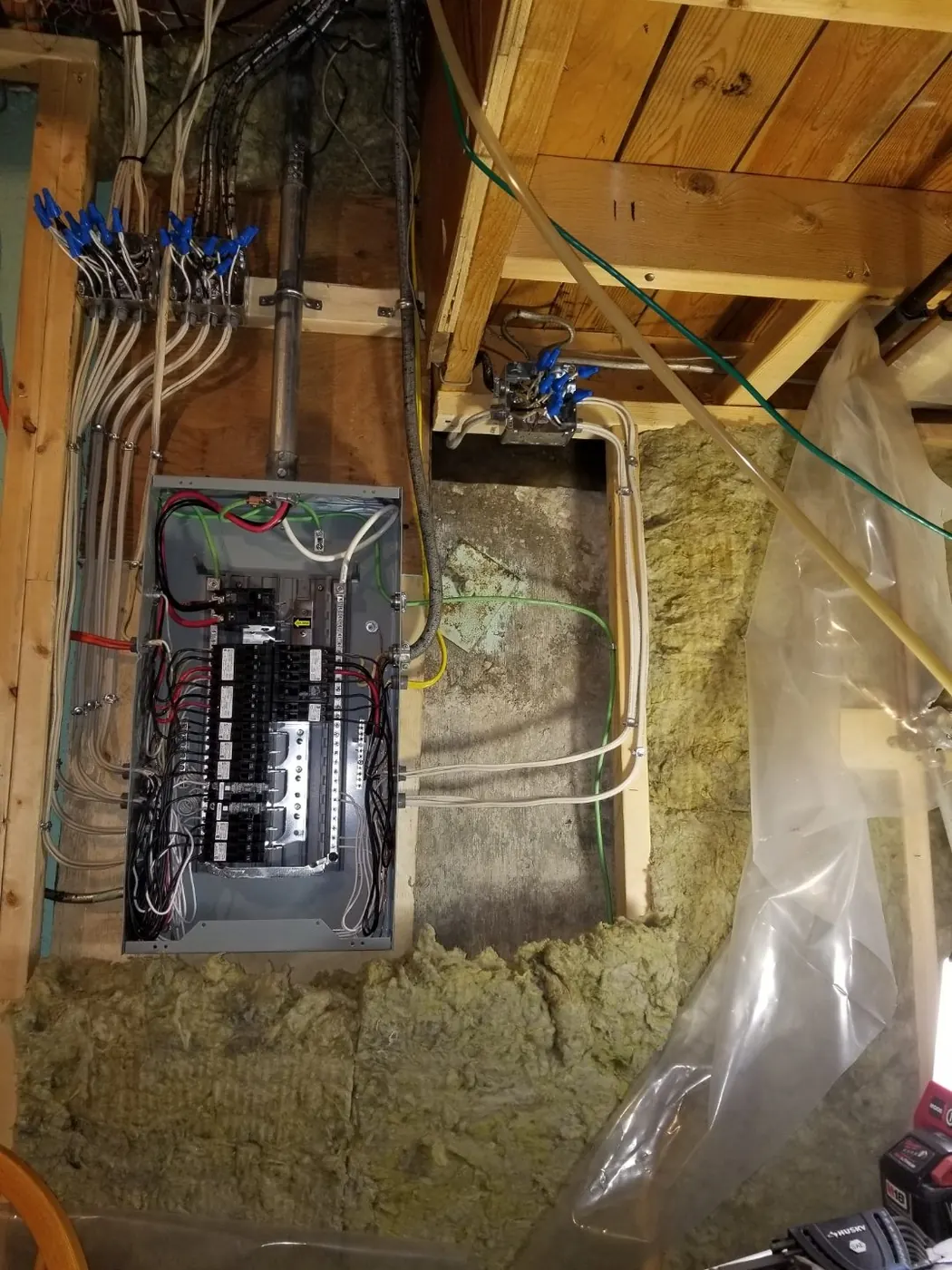
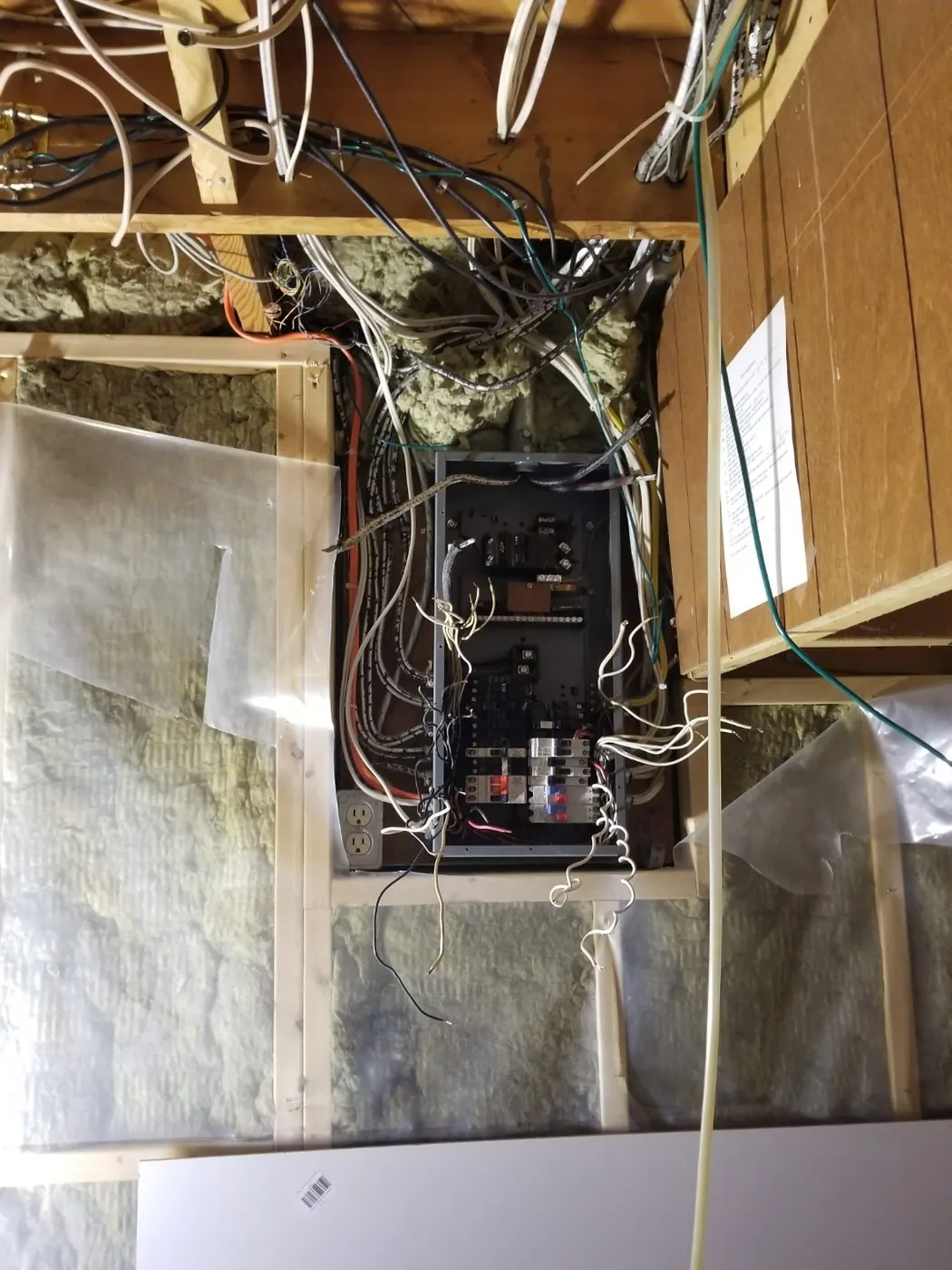
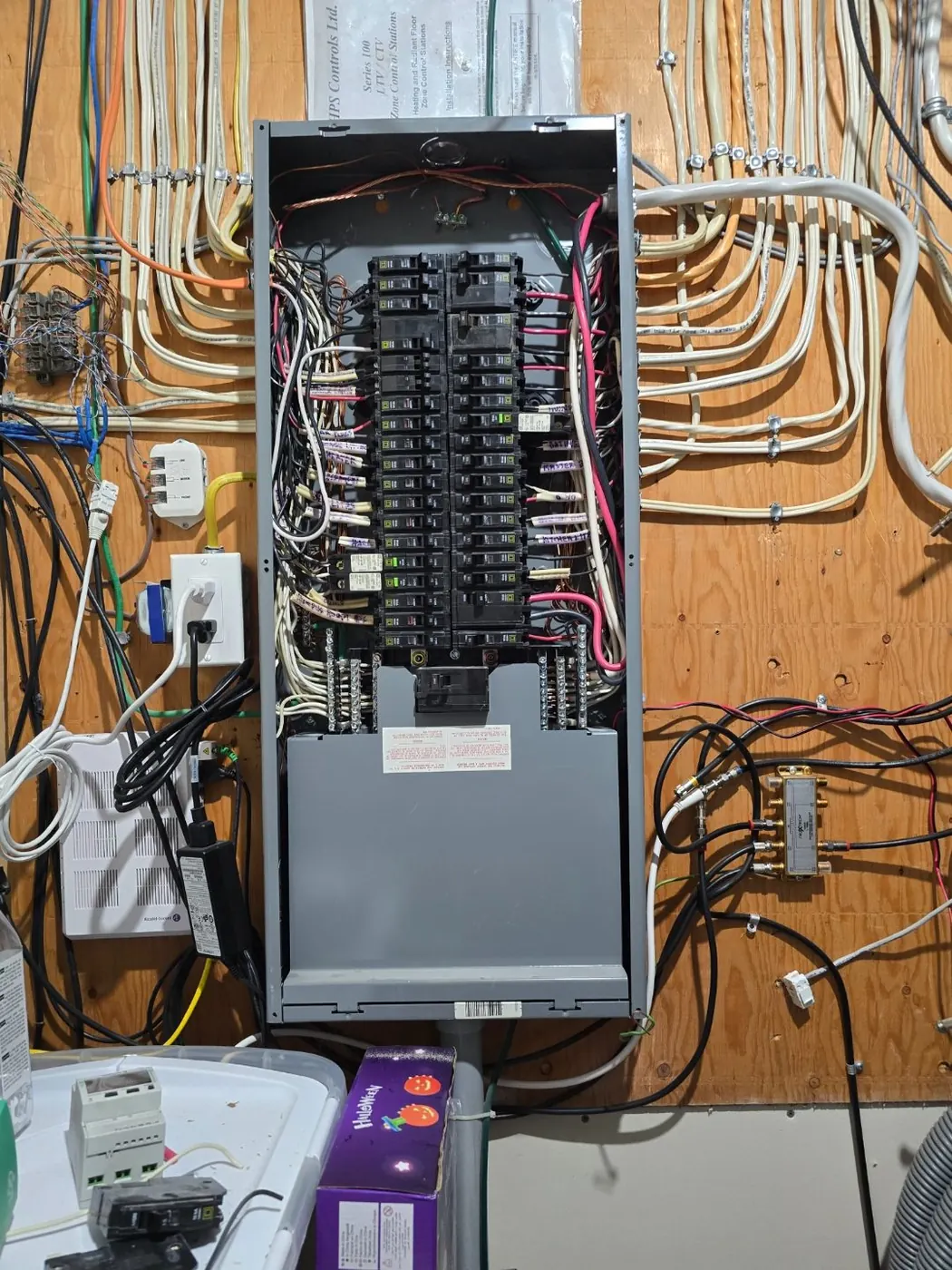
No photo of a finished transfer switch. Generator hookups are a new line on our list, so I have not got a paid one to photograph yet.
The photos on this page are all real Raydn work. Panels, services and meter bases from Edmonton jobs, because those are the parts of your generator install I have actually done hundreds of times.
I would rather show you the wall behind the switch than put a supplier's product render on my own website and hope you do not notice.
No review that mentions a generator.
- There are reviews at 5.0 on our Google profile, and not one of them is about this.
- When one is, it goes here. Until then a made up quote with a made up name is what the alternative would be, and that is not a trade I am willing to make for a page.
Fourteen years on the tools is the part that transfers. A transfer switch is four things I already do every week.
- A service entrance connection
- A load calculation
- A bonding and neutral decision
- A permit and an inspection
All four predate Master Electrician #13824, which landed in 2024. The switch itself is the newest object in the job, not the newest skill.
If that reads as a reason to wait, wait. I would rather you go into this knowing exactly where the thin spot is.
Straight answers
The seven questions I actually get asked
Every one of these came off a phone call. Tap the one you were going to ask.
Can I just run an extension cord from the generator instead?
You can, and for a fridge and a lamp plenty of people do. The limits show up fast. Anything hard wired stays dead, so no furnace fan, no well pump, no sump pump, which are usually the three reasons an outage becomes expensive rather than annoying. You also end up with cords through a window or a door in winter.
What you must never do is the other shortcut, feeding the house through a dryer plug or a spare breaker with no interlock. That is the one that pushes power back out to the street. It is the reason transfer equipment is required at all.
Can I plug a generator into my existing panel with just a breaker?
No, and this is the single most important line on this page. A published Canadian inspection bulletin puts the requirement plainly: a manual or automatic transfer switch shall be used to prevent the utility lines from being energized during a power outage and will prevent the generator from being destroyed when utility is restored
(portable generator inspection bulletin, read 20 August 2026).
A bare breaker with no mechanical interlock cannot make that guarantee, no matter how carefully you promise to shut the main off first. The whole point of the hardware is that it does not depend on anybody remembering anything.
Do I need a permit for this?
Yes. Edmonton's rule is that an electrical permit is required to install, alter or add to an electrical system
, and the city's own list of examples includes any other additions to an electrical system (City of Edmonton, read 20 August 2026). A transfer switch is not a grey area.
We pull it under our own contractor licence and the inspection result comes to you. If a quote you are holding does not mention a permit, that is worth one phone call before you sign it.
What does this cost?
I am not going to print a number I would then have to walk back. The three switch classes further up this page sit at genuinely different prices, and inside each class the real drivers are the distance from your inlet to your panel, whether your panel brand has a listed interlock kit available, whether the circuits you want need moving to a subpanel first, and whether your service has room at all.
What you get instead is a fixed written price before anything is ordered, off a site visit that costs you nothing. Play with the picker above first. If it lands you on the automatic switch and you were expecting the interlock, you have learned the important thing for free.
Will it start by itself while I am away for a week?
Only the automatic option. An inlet and interlock, or a manual transfer panel, both need a person to walk outside, start the unit and throw a switch. That is fine if someone is always home and it is not fine at all if the house is empty in January and the furnace is what you were backing up.
If nobody is going to be there, that fact alone pushes you to the automatic switch regardless of what the wattage total said.
I have solar. Does that already back me up in an outage?
Almost certainly not, and this surprises people. A standard grid tied solar system is required to shut itself down when the grid goes down, precisely so it is not energizing lines that somebody thinks are dead. Sun on the roof and no power in the house is the normal, correct behaviour.
Backup during an outage comes from either a battery or a generator. Solar then recharges the battery, which is the combination that actually works on an acreage. If that is your situation, say so when you call, because it changes the design of all three parts.
Can you do this on a cabin or an acreage with no utility service?
Yes, and that is a different and more interesting job. With no utility there is nothing to transfer away from, so the generator becomes a charging source alongside solar rather than a backup for a grid connection. Sizing, the inverter and the battery all change.
That work lives on off grid cabin power, including a load builder for sizing an off grid system rather than a backup one.
Next step
Bring me the panel photo. I will tell you which of the three you need.
The site visit is free and it ends with a written price, not a range. If the honest answer turns out to be a battery, or nothing at all this year, you will hear that instead.
Do you drive to my town?
Edmonton and central Alberta, with our own crew of 5 and no subcontractors. If your town is not on this list, call anyway and I will tell you straight whether the drive works.