The Raydn Way
On-Site,
Not Satellite.
The big guys quote your solar from a satellite image and a phone call. We walk your roof, check your attic, and audit your panel before we write a single number. That is how the proposal you receive is exact, not best-guess.
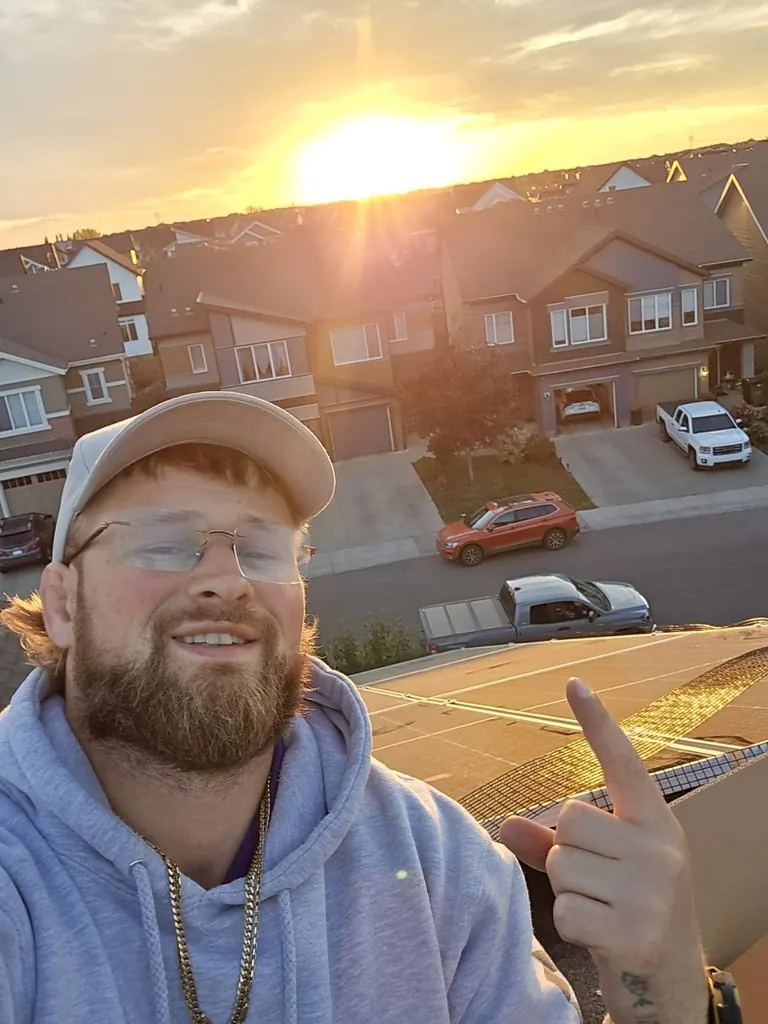
Four photos from real Alberta jobs
A satellite shows a rectangle of shingles. Here is what it leaves out.
Every one of these changed a design, a price or a material list. Not one of them is visible from the air. Tap any of the three closed cards to open the photo.
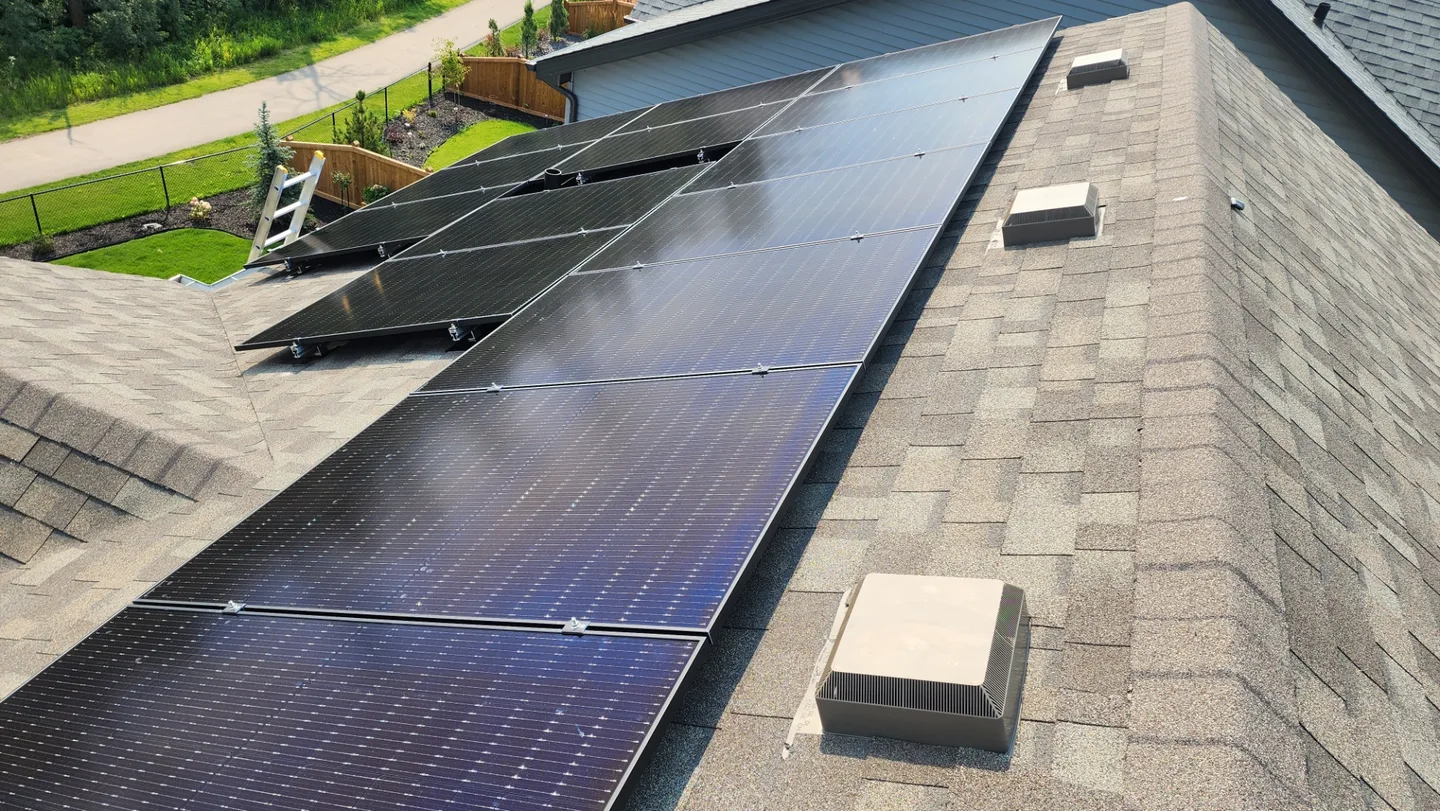
What the satellite missed
Three vents, and the array has to go around every one of them.
Aerial imagery resolves a roof plane. It does not resolve the plumbing stack, the bathroom fan or the furnace vent sticking out of it. Route a panel row around three of those and you lose two positions.
Worked example, not a reading off this roof. 2 modules at 500 W is 1,000 W. On a 20 module 10.0 kW design that is the difference between the number on the proposal and the number on the roof.
02 The panel a satellite has never seen
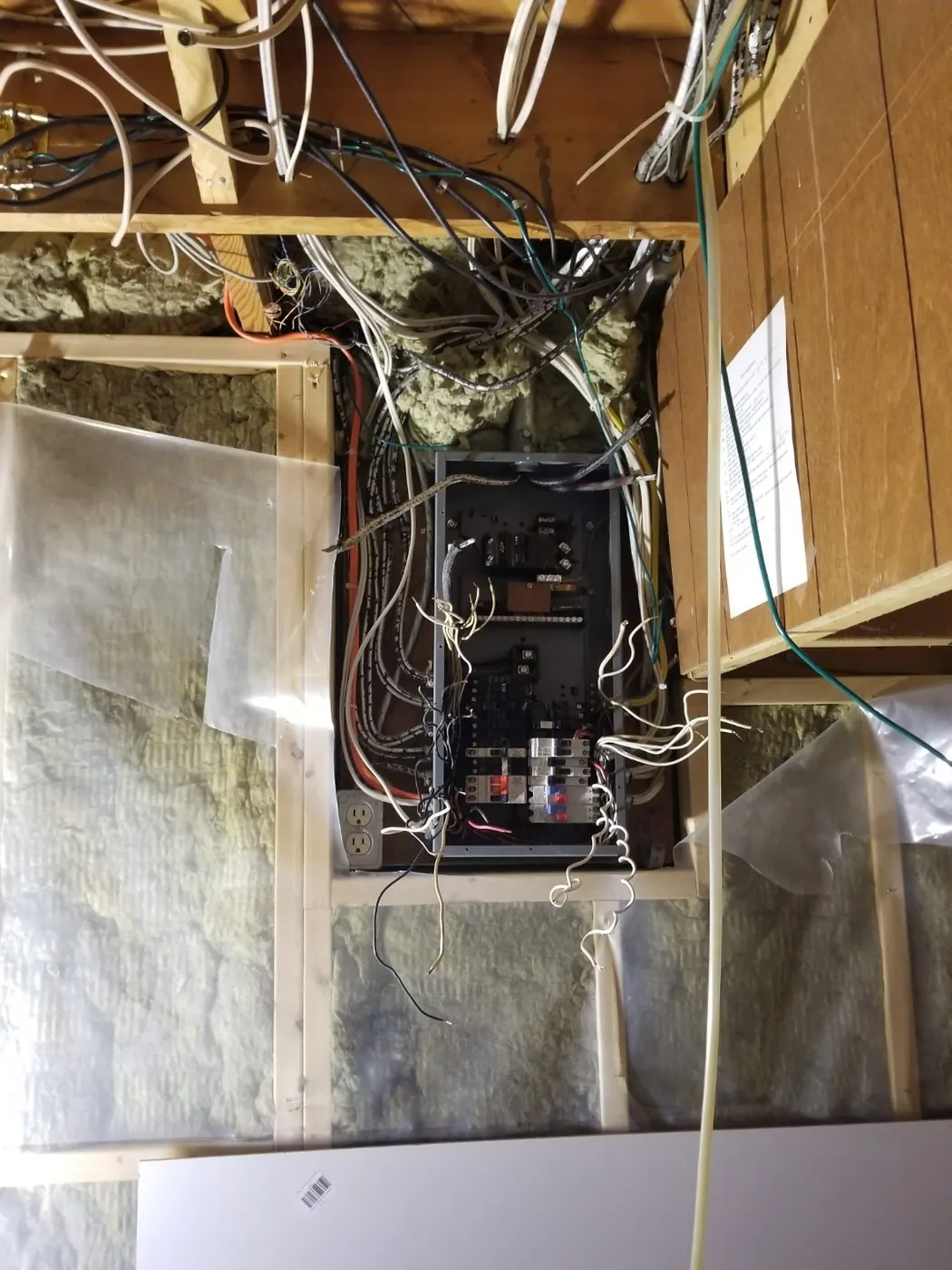
What the satellite missed
This is the number that decides whether solar goes on at all.
The main breaker rating is stamped on the breaker. Nobody can read it from orbit and nobody can guess it from the age of the house, because a 1978 bungalow in Edmonton might be on 60 A, 100 A or a 200 A upgrade somebody already did.
Worked example. 28 A times 240 V is 6,720 W. So a 12 kW design on that service is not happening until the service changes, and the continuous load derate in the Code takes the usable figure lower again. That is a calculation, not an opinion, and it is why we open the panel.
03 Where the service actually enters the house
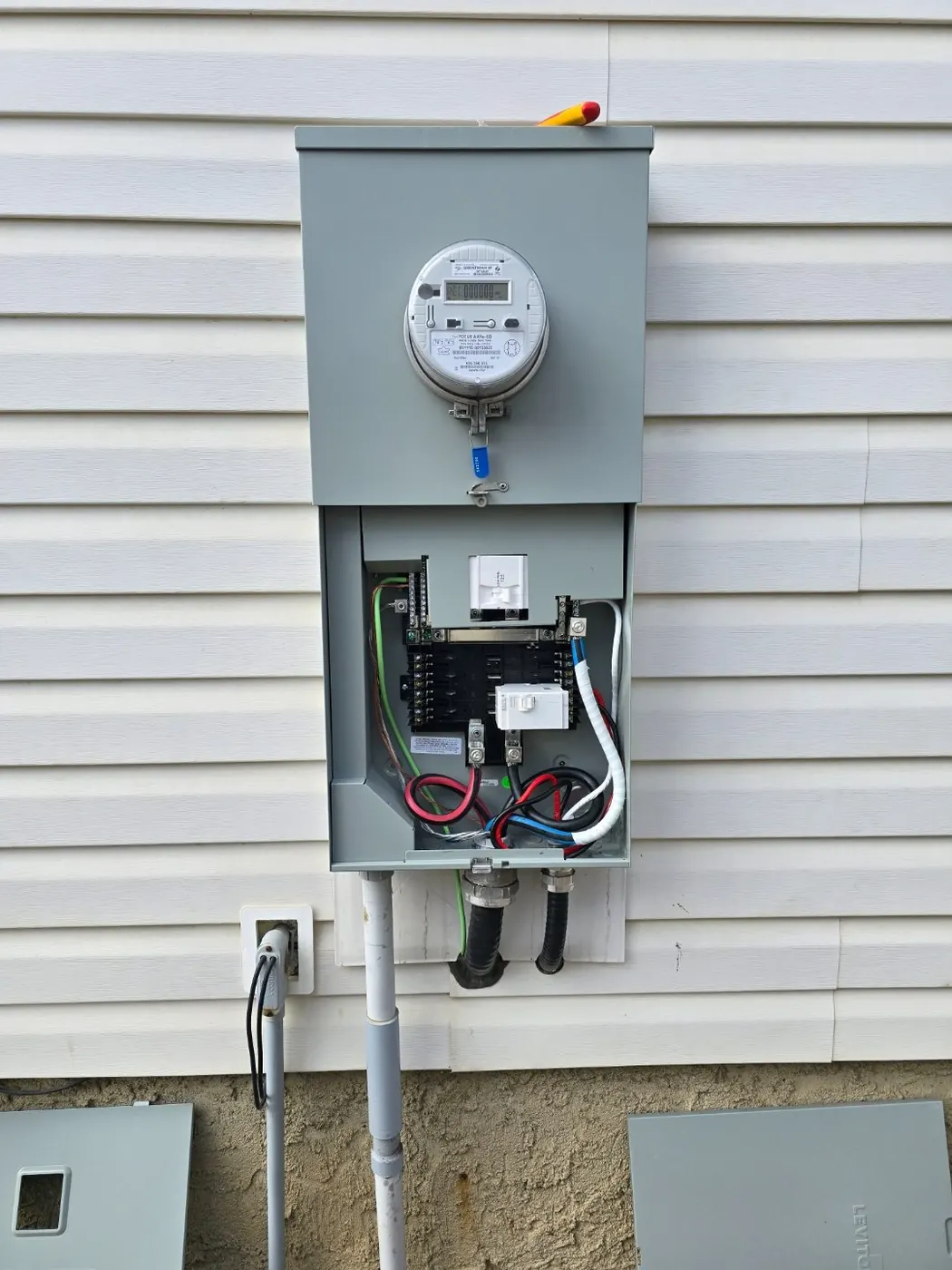
What the satellite missed
Distance is a measurement. An aerial photo has no depth.
Where the meter sits decides the conduit route from the array, and the route decides conductor size, because voltage drop grows with length. Same array, same panels, two different bills of material depending on which wall the meter is on.
Conduit length, conductor size, and whether the run goes through the attic or down an exterior wall. We walk it with a tape so the material list on your proposal is the material list we buy.
04 Whether anybody ever labelled the thing
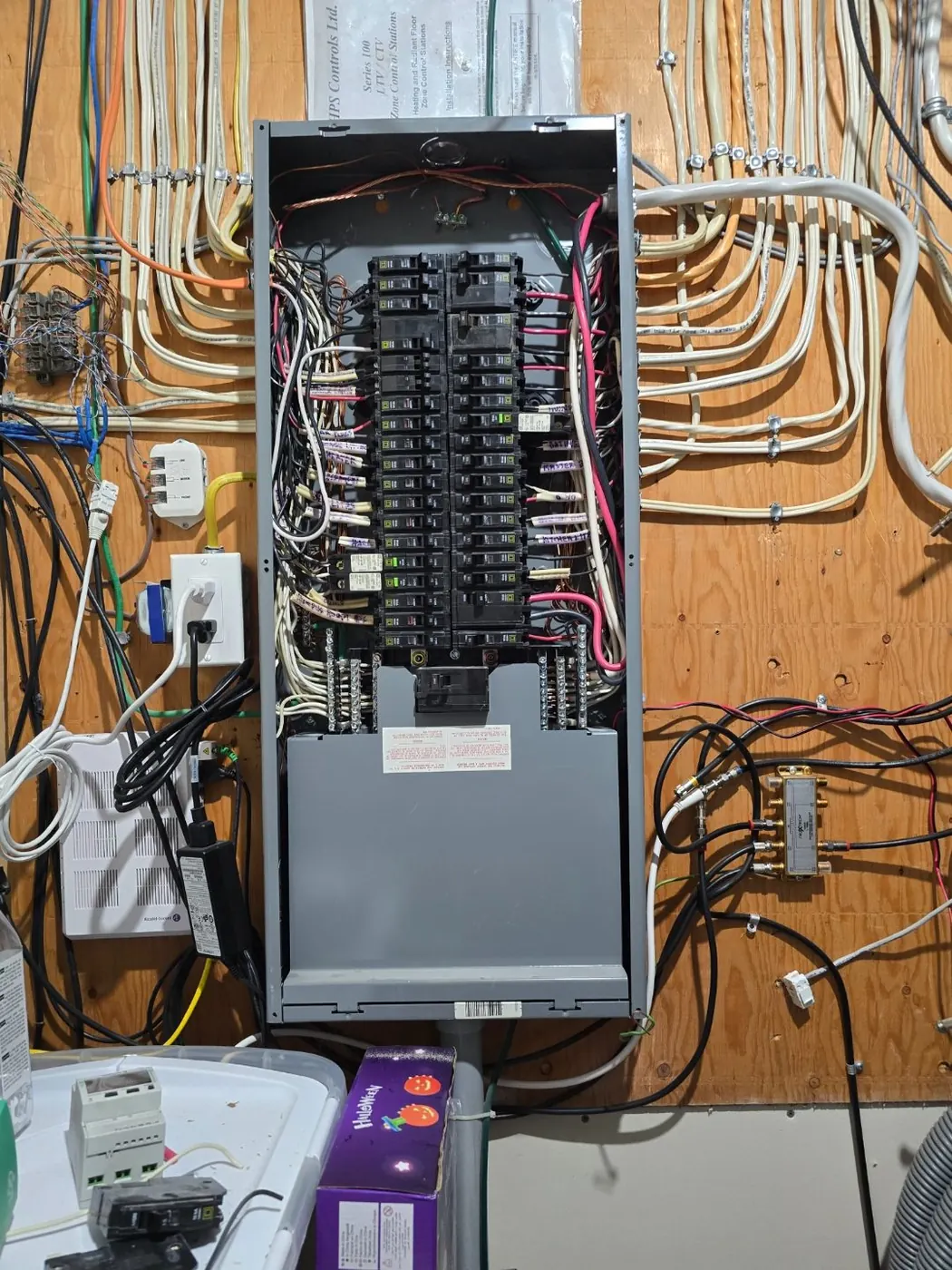
What the satellite missed
An unlabelled panel is an hour somebody has to pay for.
No directory means every breaker gets traced before anything new gets added. That time happens on a free site visit, or it happens on install day and it lands on your invoice as an extra.
The panel in this photo leaves labelled. That is the standard whether you buy solar from us or not, because a panel nobody can read is a hazard for the next person who opens it.
Photos are Raydn jobs in Edmonton and area, plus my own roof. Master Electrician #13824.
Do you drive to my town?
Book the on site visit
No satellite estimate, no door knock. A Master Electrician comes out, opens the panel and measures the roof. It costs nothing.
5.0 on Google
What customers say
These are Google reviews, copied word for word. Real jobs, real names, nothing edited.
Swipe sideways for 1 more →
The difference, in plain English
Satellite image + sales pressure
- Quote drawn on Google Earth from a desk in another city
- Sometimes a drone fly-by, sometimes nothing
- Install day surprises: vents in the way, panel too small, extra cost
- Cables stapled down the side of the house
- The salesperson disappears, you deal with a call centre
On-site by a Master Electrician
- We walk the roof and measure with a tape, not a pixel
- Attic check for conduit routing options
- Panel audit using our own load calculator on the spot
- No cables on the roof or down the side. Floating panels only.
- The person quoting is the person installing
The site visit
Five things we check, on your property, before a single number is written.
A real Master Electrician shows up. Forty-five to ninety minutes. Everything that can derail an install day, we catch now.
-
01
Roof walk & measurement
Tape measure, not pixels. We photograph everything, then we lay out the actual panel positions in person so you know exactly where each panel lands.
Confirmed on the roof, by hand
Usable area
Panel orientation
Shading from trees
Vents
Plumbing stacks
Chimneys
Skylights
Why this matters: a satellite picture cannot see a 2 by 4 vent stack or a sun shadow at 4 PM. Both kill production.
-
02
Attic check & conduit routing
Wherever possible we get up into the attic and route conduit through the interior. We map the cleanest run from the array down to the panel before you sign.
Not on our jobsCables stapled to the sidingThe cheap way downThe aerial view of your house should not show cabling.The Raydn standardFloating panelsNo exterior cables down the side of the houseThe only thing you will see externally is a code-required disconnect, where applicable.The Raydn standard: no exterior cables down the side of the house. The only thing you will see externally is a code-required disconnect, where applicable.
-
03
Electrical panel audit (our load calculator)
We open your service panel, read the breakers, measure the main, and run it through our own Raydn Load Calculator on site. We tell you on the spot what your panel can actually carry. No upsells. Just the math.
Answered on the spot, on site
Solar
An EV charger
A heat pump
A hot tub
Whatever else is on your list
Why this matters: if a 100 A service is at capacity, you need to know before signing, not on install day when the crew needs to add a $2,500 upgrade.
-
04
Roof eyes-on inspection
While we are up there, we inspect the roof itself and photograph it for you. If the roof is near the end of its life we tell you straight, because mounting solar on a 22-year-old asphalt shingle roof is a 5-year mistake.
What we look at, on the roof
Age
Condition
Leaks
Soft spots
Missing shingles
The metal roof option: if it makes sense, we connect you with Balance Roofing, our trusted partner. Metal roof + solar = lifetime install. The roof outlasts the panels. No leaks, no re-mount, no second labour bill in 15 years.
-
05
Layout sign-off, then the quote
Before we leave, we walk the final layout with you. You sign off, then we write the quote. The proposal is exact, not best-guess. Install day brings zero surprises.
Walked with you before we leave
Every panel
Every conduit run
The inverter
The disconnect
On your property
The promise: the system on your proposal is the system that gets installed. Same count, same kW, same position. If something changes, it changes during the site visit, not after material has been ordered.
Tool we built, used live on your visit
The Raydn load calculator.
We got tired of doing service-capacity math on a notepad in a driveway. So we built our own. Inputs: main breaker, every circuit, what’s planned next (solar, EV, heat pump). Output: capacity left, what to upgrade, what it costs.
We use it live during every site visit. You see the numbers on screen. No black-box quoting.
The lifetime install
If your roof has 10 years left, we tell you. Then we offer something better.
Mounting a 25-year solar system on a roof with 10 years left is a slow-motion problem. In a decade, every panel has to come off so the roof can be replaced. That's labour you pay twice.
Our trusted partner Balance Roofing installs metal roofs that outlast the solar array on top of them. The mounting hardware we use is designed for metal. No drilling shingles, no leak paths, no second labour bill in 15 years.
Do it once. Do it right. Watch it sit there and collect money for the rest of its life.
Honest quote in 24 hoursCommon questions
What people ask before they book the visit.
Is the on-site visit really free?
Yes. No fee, no obligation, no commission salesperson trying to close you in the kitchen. A Master Electrician shows up, we do the audit, you keep the photos and the report whether or not you go with us.
How long does the visit take?
Forty-five to ninety minutes depending on roof size and panel complexity. You do not have to be present the whole time. We usually just need 10 minutes of your time at the start and end.
What if I am still shopping multiple quotes?
Good. Get three quotes. We recommend it. If you want, we will audit the other quotes side-by-side with our own. See our free quote audit page.
What if the visit reveals the roof or panel is not ready?
We tell you honestly and we tell you the options. Sometimes solar is the wrong move right now and we say so. Sometimes a panel upgrade or a metal roof is the right first step. Either way, you make the call with real information, not a sales pitch.
Do you do this for commercial / acreage too?
Yes. Same approach. We walk every roof, mount field, and outbuilding before quoting. See commercial solar.
How do you get on a two-storey roof in winter?
Ladder and fall protection, same as install day. But if there is snow or ice on that roof we do not walk it. We measure from the ground and from inside the attic, and we come back when it is clear. We also do not install solar in the deep part of an Alberta winter. That is a choice we made, not a scheduling problem.
Do you actually go in the attic, or just look through the hatch?
In the attic wherever there is safe access and room to move. Some older Edmonton houses have 300 mm of blown insulation over trusses at 600 mm centres, and crawling that does more damage than the information is worth. When that is the case we say the interior run is unconfirmed and we price the exterior route instead, which is the more expensive of the two. That way the number on your proposal can only go down, never up.
What do I actually keep after the visit?
Photos of every roof face, the panel and the meter. The main breaker rating and what load is already on it. The panel layout we walked with you. A written proposal with the material list. All of it is yours whether you buy from us or hand it to the next company you talk to.
Stop trusting satellite quotes. Start with a site visit.
Forty-five minutes on your property by a real Master Electrician. Roof, attic, panel. Free. Then a proposal that is exact.
Edmonton · St. Albert · Sherwood Park · Spruce Grove · Stony Plain · Leduc · Beaumont · Fort Saskatchewan · Off-grid anywhere in Alberta