I call back from (780) 904-3462 the same day, or first thing next morning. No pitch.
Got it. Dmitry will call from (780) 904-3462 the same day, or first thing next morning.
Master Electrician #13824. Reply STOP to opt out anytime.
Receptacle$1,995NEMA 14-50. Hardware, cable, breaker, permit and inspection included.
Hardwire$2,795Wallbox hardwire, wired on a dedicated 240 volt circuit.
Complex$3,495A detached garage or a long run.
Usually the cheaper roadLoad management device$1,200 to $1,500Installed, if your panel is full. For most homes this is the cheaper road.
The other optionService upgradeFrom $6,500What it costs instead when the panel genuinely needs more capacity.
Written by Dmitry Naboka · Master Electrician #13824 · Raydn Renewables, Edmonton · Last updated July 2026.
EV project update
A home EV charger install in Edmonton. Here is the whole job.
A Volkswagen owner in Edmonton wanted to stop charging off a wall plug. Five taps below walk through what we actually did, from the panel to the moment it was energized. Inspection passed September 17, 2026.
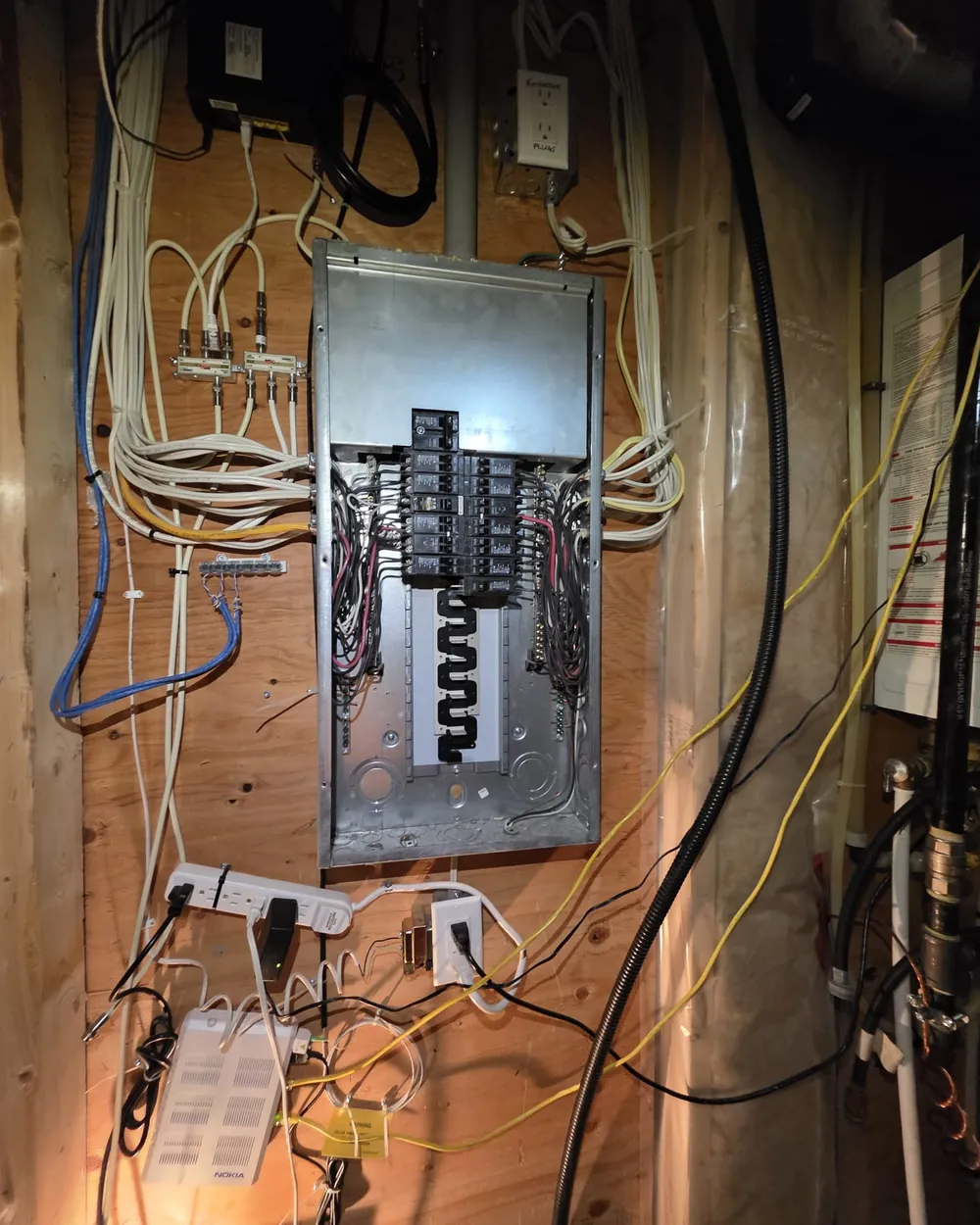
Cover off, before anything is added
Stage 1 of 5
The cover comes off before anybody quotes you.
You cannot tell what a panel can carry by counting the empty slots. The only honest way to answer it is to pull the cover, read what is already in there, and work out what the house actually draws.
On this one there was room to do it properly, so the job stayed a straight circuit install. No load management device, no service upgrade.
Why it matters. If a quote lands in your inbox without anybody looking inside your panel, that number is a guess.
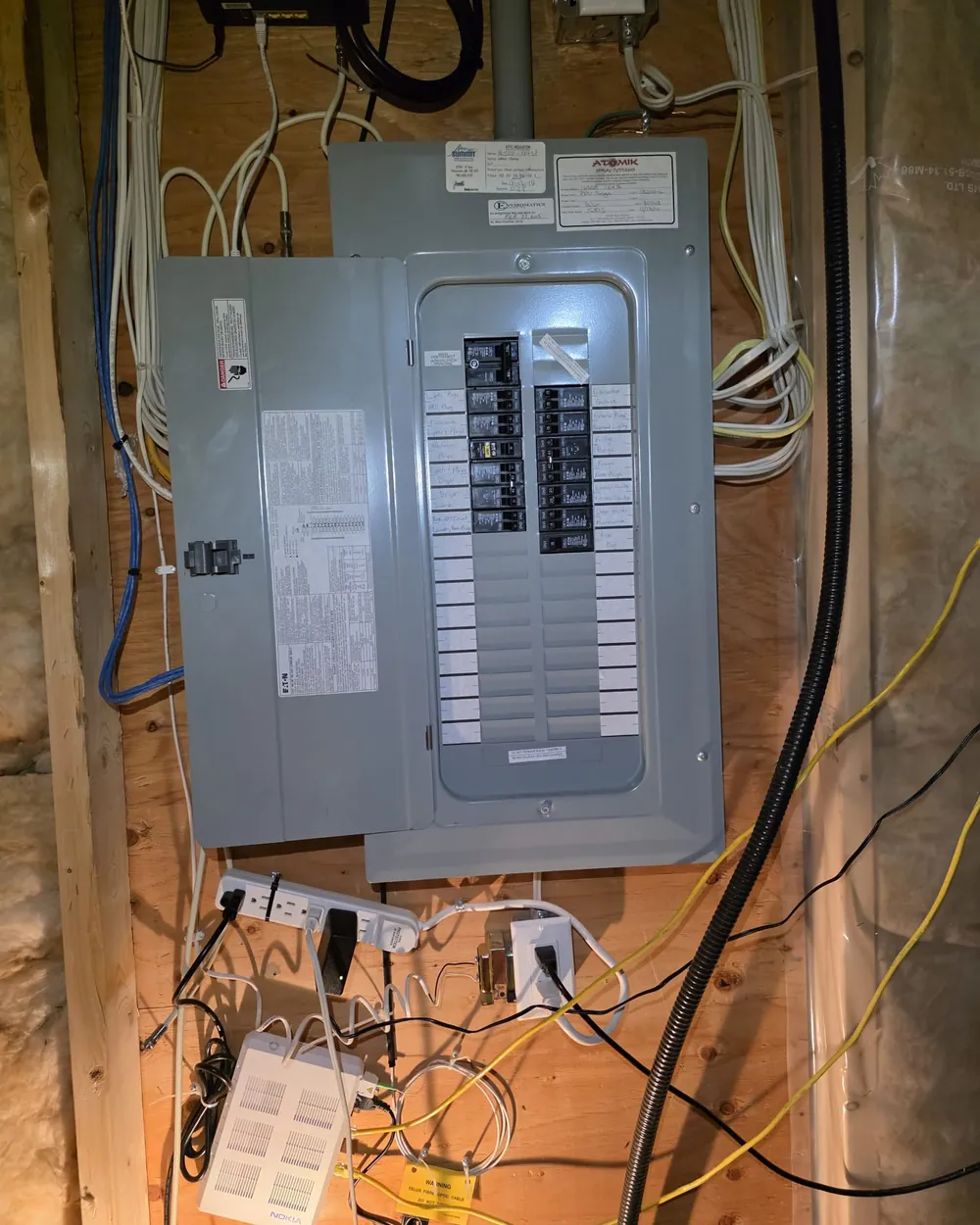
The new circuit landed in the panel
Stage 2 of 5
A dedicated 240 volt circuit, on its own breaker.
An EV charger does not share. It gets its own two pole breaker and its own run, sized for a load that sits at full draw for hours at a time rather than in short bursts like a kettle or a dryer.
That is the part people underestimate. A car charging overnight is the most demanding thing most houses ever ask of their wiring.
On the permit. This work was permitted and inspected. That is not optional and it is not an upsell, it is how you find out somebody else's mistake before it becomes yours.
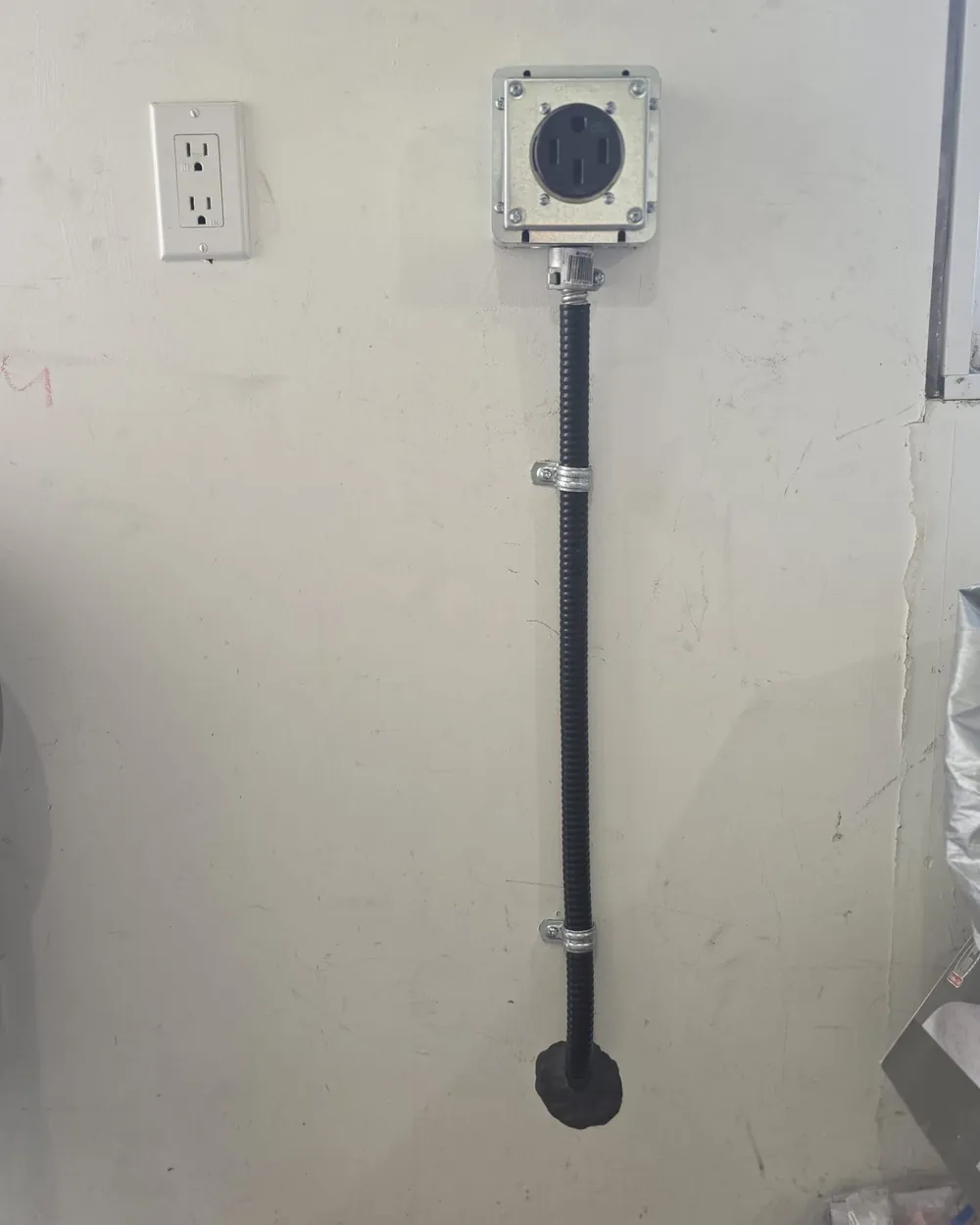
The finished outlet, mounted and closed up
Stage 3 of 5
A 240 volt outlet in a metal box, where he parks.
This customer already had the charging cable that came with the car, so he did not need to buy hardware from anybody. He needed somewhere proper to plug it in.
So the job was the outlet: a metal box, mounted solid, on a circuit built for the job. That is our posted $1,995 receptacle install, and it is the cheapest honest way into home charging when the car already came with a cable.
Worth knowing. We build the circuit with headroom above what the car pulls today. If you upgrade the car or the charger later, the wiring does not have to be redone.
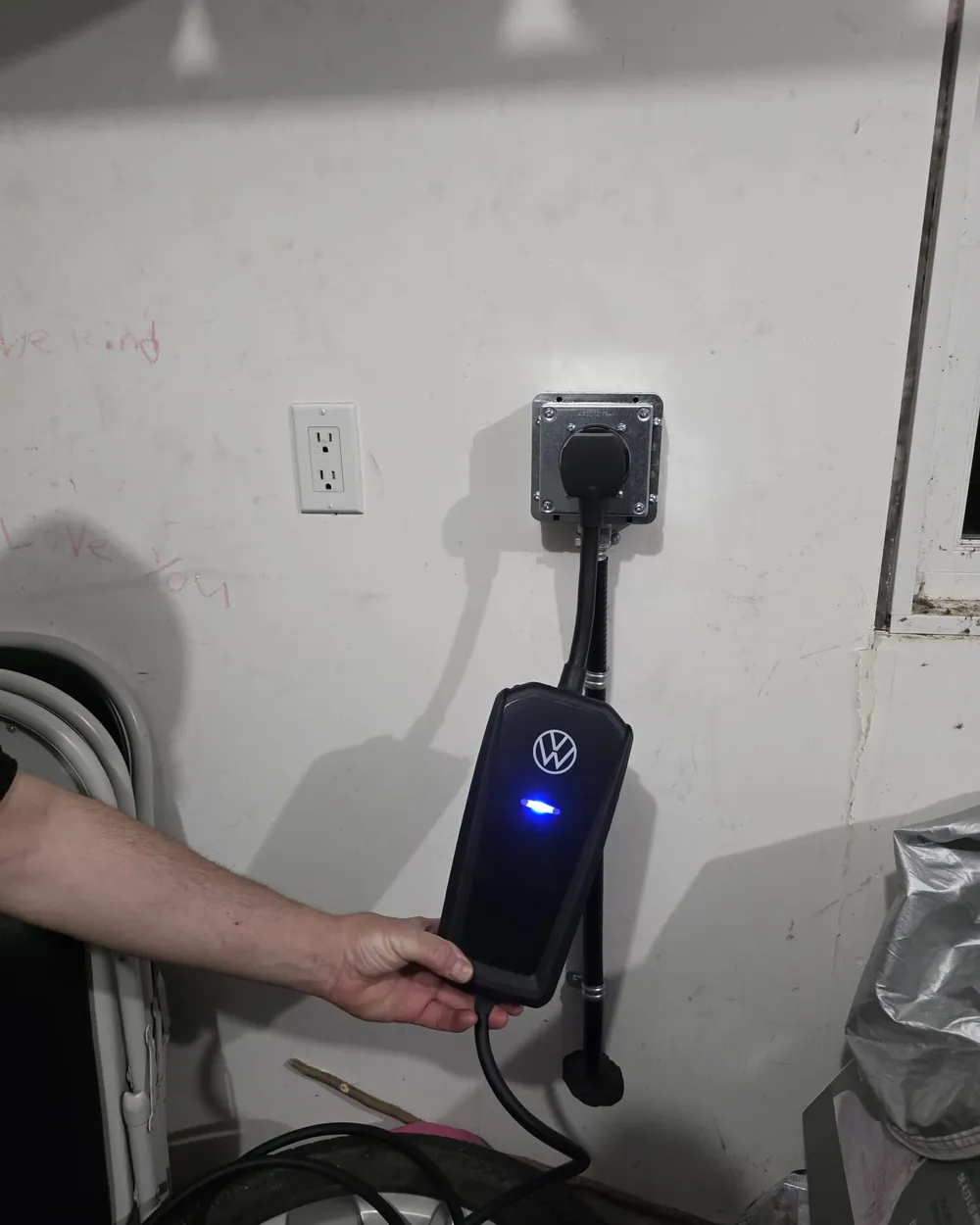
Plugged in, lit up, first charge
Stage 4 of 5
The part everybody actually waits for.
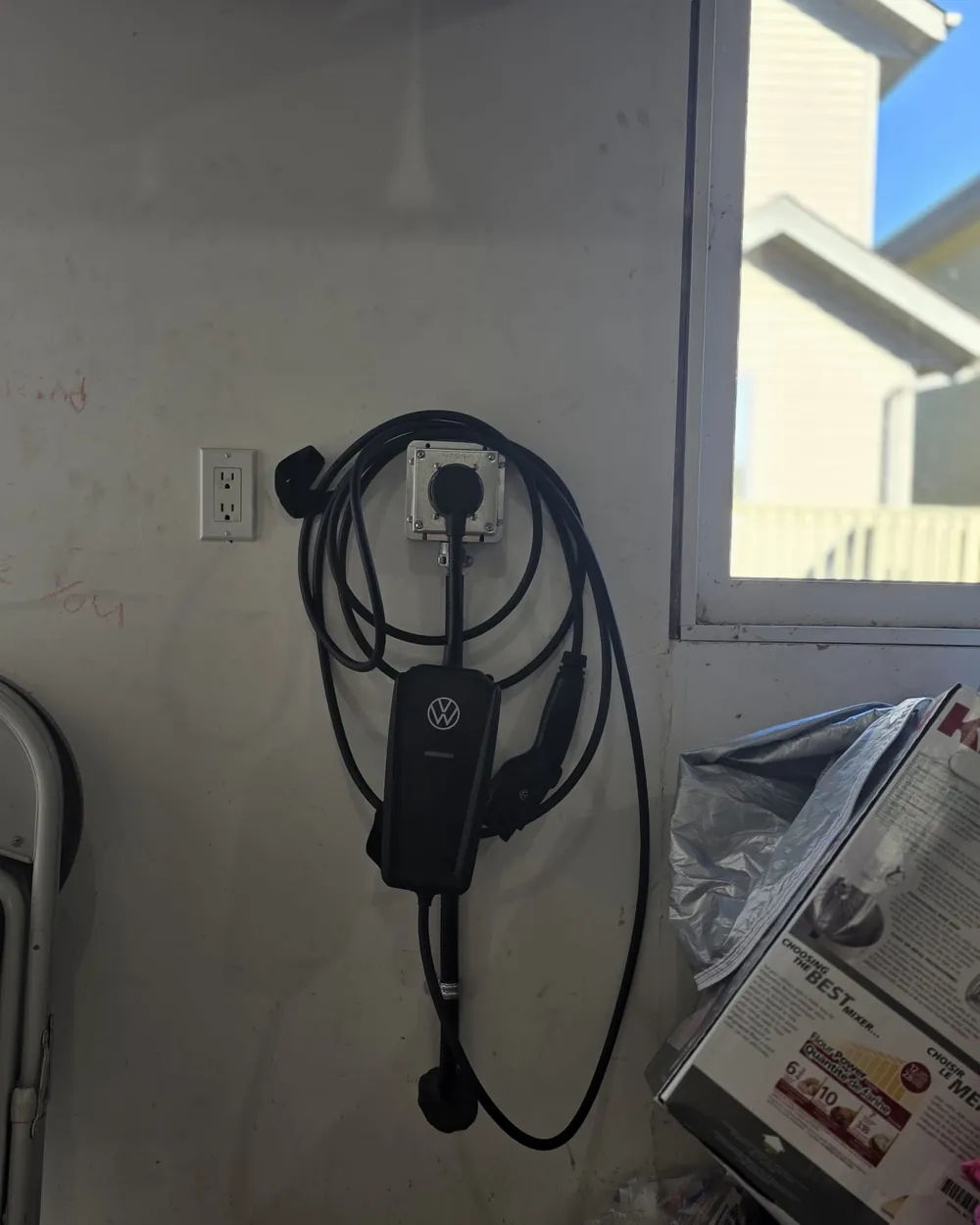
Cable in, light on, car charging. His own Volkswagen cable, our circuit and our outlet behind it.
The difference he noticed straight away was time. A standard wall plug is an overnight and then some proposition. On this circuit he is topped up in an evening.
What he told us. Roughly 30 kWh puts about a week of his driving back in the car. That is his number from his own driving, not a brochure figure.
Cable stowed, wall tidy, done
Stage 5 of 5
Cable off the floor, and a walkthrough of what changed.
The cable hangs beside the outlet instead of coiling on the ground. Small thing, but it is the difference between a charger you use every night and one you stop bothering with.
Then we walk you through it. What breaker it is on, what it can carry, and what to do if it ever trips. You should know what is in your own panel.
Inspection passed September 17, 2026. Permit pulled, work inspected, signed off.
The install
240 V outletPosted $1,995 receptacle install
Cable we pulled
90 feetPanel to the garage, armoured where it is exposed
What his car draws
32 ampsThe circuit is sized above it on purpose
Charging time
An eveningNot overnight and then some
Owner's own figure
30 kWhAbout a week of his driving
Inspection
PassedSeptember 17, 2026
How the size of the circuit actually gets decided.
Not by the charger. By the breaker, and by a rule that treats car charging differently from everything else in your house. Pick a breaker size and watch what the code leaves you.
Breaker on the circuit
80%
Breaker rating
50 amps
What a car may draw on it, continuously
40 amps
Biggest charger that fits
9.6 kW
Eighty percent of the breaker, every time. The other twenty is not wasted, it is the margin the code makes us leave.
86-300(1)
Its own circuit, nothing else on it. A car charger gets a branch circuit to itself. No shared plugs, no lights, no freezer in the garage.
86-302 and 8-104(6)
Charging counts as a continuous load. Most things in your house are allowed to load a circuit fully because they cycle. A car pulls the same current for hours, so the code holds it to 80 percent of the breaker and 80 percent of the wire.
Alberta 24-ECI-086
Sized for the highest setting, not today's setting. If a charger can be turned up later from an app or a dial, Alberta makes us size the circuit for the maximum it can reach. Only a setting locked inside the box, set by an electrician and labelled, is allowed to count lower.
Rules quoted from CSA C22.1:24, the 2024 Canadian Electrical Code Part 1, in force in Alberta since April 1, 2025. The provincial interpretation is STANDATA 24-ECI-086, issued April 2025 by the Provincial Electrical Administrator.
“Had a great experience with Raydn Renewables. Dmitry was very professional, friendly, and easy to deal with. He explained everything clearly and did a great job installing my EV charger. Everything went smoothly and I’m very happy with the result. I really appreciate his honesty and attention to detail. Highly recommend Dmitry and Raydn Renewables!”
Ilker Binay, Edmonton · posted to Google September 16, 2026 · the job on this page. Copied word for word from our Google reviews, 75 reviews at a 5.0 average.
The bit nobody tells you when you buy the car.
An EV moves your fuel bill onto your power bill. Your consumption goes up and it stays up. Which means the rate you are on matters far more than it did the week before you bought the car, and it is the reason a lot of our solar conversations now start with somebody who just got an EV.
My own July 2026 statement, divided out
Power I pulled off the grid267 kWh
Energy charge for that power$93.45
Delivery, transmission, local access, admin$62.30
What the electricity side actually cost$155.75
58.3¢per kWh, all in. That is $155.75 divided by 267 kWh, off my own bill, nothing left out.
Now the part that makes that number misleading, and I would rather tell you than have you find out.
58.3¢ is an average, not a price.
It is that high because I barely imported anything.
My roof covered most of the house, so 267 kWh had to carry the full delivery and admin bill on its own.
Spread the same fixed charges over a house pulling ten times that and the average collapses toward the energy rate.
Any company handing you one all in cents per kWh without telling you what volume it was divided by is handing you a number that does not travel.
So here is the honest way to price a charge. The delivery and admin part is on your bill whether the car is plugged in or not. It does not go up because you charged. What the car's power actually costs you is the energy rate, and that is the number the rate you sit on controls.
Ilker's 30 kWh, priced on three real rates
$3.6012.01¢, Rate of Last ResortWhere you sit if you never picked a plan.
$10.5035.0¢, the HI rate I am onGreat when you export more than you use. Expensive to buy on.
$1.775.90¢, the Solar Club LO rateWhere a registered micro generator gets put automatically.
5%Cash back, battery EV owners3% for members, upgraded to 5% if you drive a battery EV. Paid on imported power, HI rate only.
Same 30 kWh, same week of his driving, three different bills.
That is the whole argument. Put a system on the roof, register as a micro generator, and the power you pull for the car gets bought at the bottom number instead of the top one.
On a sunny day with the car plugged in you are not buying it at all, you are running the car off your own roof.
It cuts the other way too.
Once you are exporting more than you use, the HI rate is the one that pays you, and on that rate imported power is expensive.
That is why I am on it and why my own charge above prices out at $10.50.
So the play is to charge in daylight off your own production and keep the car off the grid, not to charge at midnight out of habit.
The 5% is Solar Club's own published figure, "Bonus: 2% cash back for battery EV owners (5% total)", and their site states the cash back applies only while the account sits on the HI Rate, so it is not a free add on to the 5.90¢ number beside it.
The 267 kWh, the $93.45 and the $62.30 are off my own July 2026 statement, every line item published on my own bill.
Rewards Power is my referral partner and I am on this rate structure myself, so weigh that. These are not Raydn prices, retail rates move, and if the retailer's written number does not match this page then the retailer is right and this page is out of date.
The charger is the cheap part. Your panel decides the price.
Two quotes for the same charger can be $1,300 apart and both be honest, because they are not describing the same job. One of them looked in your panel. Here is what that look actually finds, so you can tell which quote you are holding.
1. What service is the house on?
It is stamped on the main breaker at the top of your panel. If you cannot find it, leave it on 100 amp, that is the common one on older Edmonton homes.
2. Which of these does the house already have?
Likely load management
A 100 amp service with no major loads selected.
Pick what the house has and this will tell you which of the three roads I expect to land on.
Read this as what I expect to find, not as your answer.
It is a plain indication built on service size and the big loads, nothing more.
The real answer comes from a load calculation done on your own panel, with the actual nameplates, and I do that before I quote a number.
Nobody can price this off a web page, including me.
The three roads, and what each one really costs
Every EV job lands on one of these. The charger and the labour barely move between them. What moves is whether your service can carry a car on top of everything else.
Road one. Straight install
There is real headroom. The charger gets its own two pole breaker and its own circuit, and nothing else in the house has to change.
Install$1,995 to $3,495
Total $1,995 to $3,495
Nothing added. This is the posted price and it is the one most quotes assume without checking.
Road two. Install plus load management
Two systems in one installation.
The service cannot carry the car flat out on top of everything else, but it can carry it if something watches the total.
A management device sits between the panel and the charger, reads the whole house, and backs the car off when the range, the dryer and the air conditioning all come on at once.
Then it lets the car charge full speed once the house quiets down, which is usually while you sleep anyway.
Install$1,995 to $3,495
Management system$1,200 to $1,500
Total $3,195 to $4,995
This is the line that goes missing from a cheap quote. It is a second piece of equipment, it gets mounted, wired, commissioned and set up against your actual service, and it goes on the permit. A number that leaves it out is not cheaper, it is incomplete.
Road three. Service upgrade
Sometimes management is not enough, or the house was already out of room before the car showed up. Then it is a new panel, and often new service conductors, a new mast and meter, a permit and the utility.
Install$1,995 to $3,495
Service upgradeFrom $6,500
Total from $8,495
More money today and worth it when it is the right call, because it buys headroom for the second car, the hot tub and the heat pump instead of just the one circuit.
Why one quote comes in lower
I would rather you saw this before you phone around than after. When a number lands well under mine, it is almost never the same work. It is usually one of these five.
1
Nobody took the cover off. You cannot tell what a panel can carry by counting empty slots. A quote written from a photo of a closed panel door is a guess with a price on it.
2
No load calculation was done. The real one follows Canadian Electrical Code section 8 and it takes an hour. Skipping it is how a 100 amp house ends up with a car on it and no margin left.
3
The management system is not in the number. The single biggest gap, and the one that turns a cheaper quote into a change order once the work starts.
4
The permit and the inspection are not in the number. Mine are. An EV charger is a permanent 240 volt circuit, and the permit is what protects you at resale and on your insurance.
5
Nobody measured the run. A price quoted over the phone assumes the charger goes on the other side of the panel wall. Ilker's went 90 feet, panel to garage, armoured cable everywhere it is exposed, and it did not move his price. Ask the cheaper quote what run length it assumed and watch what happens.
6
The warranty call has nowhere to land. Five person crew, no subcontractors, and the Master Electrician who signed the permit is the one who answers the phone in two years.
What you are actually buying
A circuit sized off a real calculation, a management system where the service needs one, a permit pulled and an inspection passed, and a charger that is still right the day you add a second car.
My prices are posted and all in for exactly that reason.
You can check every one of them before you call, and I will tell you on the phone which road I think you are on and why.
Typical installPosted and all in. $1,995 receptacle, $2,795 Wallbox hardwire, $3,495 complex
CircuitA dedicated 40 to 60 amp 240 volt circuit
Panel full?Load management, about $1,200 to $1,500, against $6,500 and up for a service upgrade
PermitRequired. Permit and inspection are part of the job
ChargersTesla Wall Connector plus universal Level 2 chargers
Pairs withSolar and battery, designed as one system
Can your panel actually handle a charger?
This is the first question, and the honest answer is: it has to be checked, not assumed. A lot of older Edmonton homes look full on paper.
Try it on your own house
Tap your service size, tap what runs on electricity, tap the charger you want. The verdict updates as you go.
Headroom left33Aafter everything you tapped
Charger needs50Acontinuous load at 125 percent
Headroom you have
33A
Charger wants
50A
Tight. Load management is the cheap way out, no new panel. Add load management, about $1,200 to $1,500 installed
An illustration of how the math moves, not a load calculation. I do the real one myself, on your panel, before quoting.
Why not just cram a breaker in and hope?
The real calculation follows Canadian Electrical Code section 8. Older 100 amp homes are the ones that surprise people, once the range, dryer, and furnace get added up.
And the failure is not a tripped breaker on day one. It is a service that sits overloaded for years. Nuisance trips in January, cooked lugs, an insurance problem nobody found until something burned. The calculation costs me an hour. Guessing costs you a panel.
Load management, or how to skip a service upgrade
If your panel is full, a load management device is usually the cheap way out. About $1,200 to $1,500 installed, against $6,500 and up for a service upgrade. Sometimes the upgrade is still the right call, and I will tell you when it is.
Load management device
$1,200 to $1,500
Service upgrade
From $6,500
Bar length is the price itself. Same charger on the wall either way.
House gets busydinner, laundry
The device sees the total draw and cuts the charger until the load drops.
House goes quietovernight
Charger opens up to full speed, while the car is parked anyway.
What you actually give upnothing you would notice
When is the upgrade still the right call?
When the panel is genuinely at the end of its life, when you are adding more than a charger, or when the headroom is so thin that the charger would be cut constantly instead of occasionally. I will tell you when that is the case. Doing the expensive thing when the cheap thing works is exactly what I will not do to you.
Permit, inspection, and why they protect you
1
Load calculation and quote
I check your panel, service, and the route to the car. You get a firm number, not a guess.
2
Permit and code-compliant install
A dedicated 240 volt circuit wired to code by a licensed crew, on a pulled permit. Not a weekend handyman job.
3
Inspection and sign-off
The inspection is what protects you at resale, on insurance, and against fire risk. Done right and on the record.
An EV charger is a permanent high-amperage circuit, so it needs a permit and an inspection the same as any other dedicated circuit. This is not bureaucracy for its own sake.
What a bad circuit costs youUndersized or badly wiredA genuine fire riskAn uninspected one can also cause headaches with your insurer and at resale.
What I do about itI pull the permitInspection includedAs a licensed Master Electrician's shop I handle both as part of the job, so it is never left as your problem.
Panel looks full to you? Send me a photo of it and I will tell you which road you are on before I quote anything.
We install the Tesla Wall Connector to spec. Wired and permitted to the same rigorous standard.
Any EV
Universal Level 2
Standard chargers that work with any EV. Not sure which to buy? I walk you through it first.
Solar
Charge off your own power
Pair the charger with solar and a battery. Starlink-ready power for rural shops.
The charger you pick does not change how carefully the circuit gets wired, because the safety lives in the wiring and the permit, not the brand. Where it gets interesting is pairing the charger with your own solar.
Cheapest way to run an EV in AlbertaCharge off your own powerOff panels during the day, or off a home battery in the evening.
One system, not threeMaster ElectricianI design the charger, solar, and storage to work as one system.
Start with just the chargerSolar drops in laterI build the panel and wiring so the solar and battery drop in cleanly later.
Real install
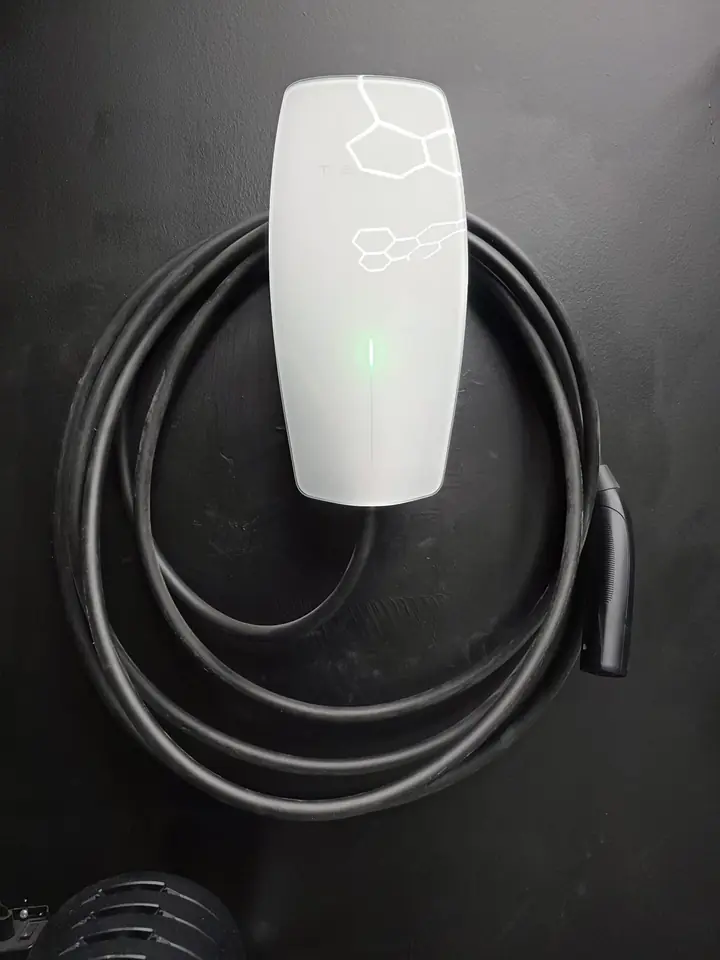
A Tesla Wall Connector, installed by Raydn.
Mounted on the garage wall, cable coiled on the holster.
Up to 71 km of range per hourAt 11.5 kW and 48 A, depending on the car. That is Tesla's number.
HardwiredNo plug and no receptacle to wear out.
Master ElectricianLicence 13824, 14 years in the trade.
The code adds up your house before the charger goes on.
Every service has an amp rating, and the calculated load is not allowed to go over it. This is a real 100 amp house in Spruce Grove that we quoted, run through the code calculation.
CEC 8-104 2)Calculated load cannot go over the rating.
CEC 8-200 1) b)A house over 80 m² counts at least 24,000 W, which is 100 A.
STANDATA 24-ECI-086A charger counts at its top setting unless an electrician sets it lower inside.
CEC 8-106 10)A managed charger counts at the most the manager allows.
CEC 8-500 2)The manager cannot push you over.
Rules read in the 2024 Canadian Electrical Code, CSA C22.1:24, and Alberta STANDATA 24-ECI-086, 1 October 2026. The house numbers come from the load calculation on that quote.
Every quote below is verbatim from our Google Business Profile. A licensed Master Electrician wires every EV charger to code. Click through to verify any review yourself.
Awesome experience with Dima. I come from an automotive background and Dima was fantastic at explaining everything to me. I got a free lesson in house electrical and got everything fixed. He went over all the options for adding solar down the road and all the different options I had. His app and calculators are fantastic and easy to use. Highly recommend anyone who's thinking of going solar to contact him. Super easy, super friendly and the way he's able to teach you at the same time.
Devin Guedo
Edmonton, AB
Google review
June 2026
We have used them on multiple projects and are very happy to say they are our Edmonton electricians!! They do great work and are very professional !
Brian Thompson
Edmonton, AB
Google review
2026
Honest Answers
The questions homeowners actually ask
From a Master Electrician's chair, not a salesperson's script.
How much does it cost to install a Level 2 EV charger in Edmonton?
Posted and all in.
For a NEMA 14-50 receptacle
$1,995
For a Wallbox Pulsar Plus hardwire
$2,795
For the complex tier
$3,495, which covers long Teck 90 runs, outdoor work, or a detached garage
Hardware, cable, breaker, permit and inspection are all in that number, and there is no door-to-door markup.
And if your panel is full:
A load management device runs
about $1,200 to $1,500
installed
Against, for a service upgrade
From $6,500
installed
I confirm which tier you are in after I see your panel and the route to where the car parks, because that is what decides it.
Can my electrical panel handle an EV charger?
Often yes, but it has to be checked, not assumed. A Level 2 charger typically wants a 40 to 60 amp dedicated circuit, and whether your panel has room depends on your service size and everything already on it. A lot of older Edmonton homes on a 100 amp service look full on paper.
The good news is that a load management device can often let you add a charger without a service upgrade by sharing capacity intelligently.
Load management
about $1,200 to $1,500
installed
Against, for the upgrade
From $6,500
installed
I do the load calculation properly so you are not guessing.
Do I need a permit to install an EV charger in Edmonton?
Yes. An EV charger is a permanent 240 volt circuit, so it needs an electrical permit and an inspection, the same as any other dedicated circuit. This is not red tape for its own sake: the permit and inspection are what protect you at resale, on your insurance, and against a fire risk from an undersized or improperly wired circuit. As a licensed shop I pull the permit and handle the inspection as part of the job, so it is done right and on the record.
What is load management and why does it matter?
Load management is a smart device that lets your EV charger share your home's existing electrical capacity instead of demanding its own full dedicated headroom.
It watches your total draw
and cuts the charger when the house is using a lot
Then lets it charge freely
when demand drops, usually overnight
For many Edmonton homes
it is the difference between a simple charger install and an expensive panel or service upgrade
Load management
$1,200 to $1,500
Service upgrade
From $6,500
It is one of the first things I check, because that beats it for most homes.
Not all of them, and I will say so when the upgrade is the right call.
Can you install a Tesla or a universal EV charger?
Yes. We install the Tesla Wall Connector to spec, and we also install universal Level 2 chargers that work with any EV using the standard connector. If you are not sure which to buy, I will walk you through the trade-offs for your car and your garage before anything gets ordered. The wiring and the permit are the same rigorous standard either way, because the safety of the circuit does not depend on the logo on the charger.
Can I pair my EV charger with solar or a battery?
Absolutely, and it is a smart combination. Charging your car off your own solar during the day, or off a home battery in the evening, is the cheapest way to fuel an EV in Alberta. As a Master Electrician I can design the charger, the solar, and the storage to work together, and I build the panel and wiring with that future in mind even if you start with just the charger. We also do Starlink-ready power for rural garages and shops, so the whole setup is planned as one system.
I run 9.56 kW on my own roof in Edmonton. Four bills in a row have come back as credits, June to September 2026. The latest sent 778 kWh back to the grid and came in at -$109.66. The four year record is up too, 32,460 kWh since September 2022, December included.
Tell me those three and I will do the load calculation, tell you honestly whether you need a service upgrade or just load management, and give you a firm number.
Tesla or universal, permit and inspection included, wired to code by a Master Electrician who will still be here if anything ever needs a warranty call.
This is the arithmetic that decides whether your existing service carries the charger, and it is the reason a real answer needs a look at your panel instead of a number over the phone.
Every rate here is a published third party figure or is labelled as my own. If one has moved since the read date, tell me and I will correct the page.