Panel Upgrades · Edmonton · Master Electrician #13824
Quote in 60 seconds. Master Electrician calls back.
Drop your number. Dmitry calls within business hours. No pitch, no forms.
Got it. Dmitry will call from (780) 904-3462 within business hours.
Master Electrician #13824. Reply STOP to opt out anytime.Panel Upgrade in Edmonton 100 Amp to 200 Amp
The panel is the spine of the house. We upgrade it permitted, inspected, and done once.
Master Electrician #13824, 14 years on the tools
Permit card and inspection report are yours when we leave
50+ jobs and 60+ kW of solar across Alberta since August 2025
No subcontractors
Most jobs $800 to $4,500. Panel upgrades from $2,200. Free quote, no obligation.
The Calculation Nobody Shows You
Add up your house the way the permit does.
This is the real Rule 8-200 arithmetic, running live. Tap what is in your house and watch the number that decides whether you need an upgrade at all.
Above grade living area, not counting the basement.
Gas furnace and gas hot water are assumed unless you tick otherwise, because that is most of Edmonton.
The number you just read off your main breaker.
There is a second way to answer this, and it saves people money
Rule 8-106(8). When you are adding a load to a service that already exists, the code lets me calculate it a different way: your actual metered peak demand over the last twelve months, taken from the utility, plus the nameplate of the thing you are adding. Real houses almost never draw what the 8-200 calculation says they could.
So a house that fails the calculation above can still pass on demonstrated demand. I pull the data, do both, and send you whichever one is true. If that means I do not get to sell you a service upgrade, so be it.
The rule is national CEC text. Source, checked 20 August 2026:Technical Safety BC bulletin quoting Rule 8-106(8) in full
What this tool covers, and where it rounds against you
It rounds toward the safe side. Electric heat is counted at full nameplate here. Section 62 sometimes allows less, which I work out by hand. So if this tool says you are close, you may actually be fine.
What is in it: the basic load from your area, electric heat or air conditioning taking the larger of the two where they cannot run together under Rule 8-106(4), a single electric range, tankless and hot tub water heating at 100%, and EV supply equipment at 100%. Then the floor from Rule 8-200(1)(b), which is 24,000 W at 80 m² or more and 14,400 W under that.
What is not in it: a standard electric tank water heater, a welder, a shop, a suite, and anything else I would find by walking the house. Rule 8-110 also counts part of a finished basement into your living area, which nudges the first number up. I use above grade area here to keep it honest and simple.
This is the arithmetic, not the permit. The number that goes on the permit is one I sign my licence to, and it comes off a walkthrough. Master Electrician #13824.
Sources, checked 20 August 2026:City of Edmonton load calculation sheet, Rule 8-200(1)(a)Single dwelling worksheet, the 24 000 W and 14 400 W minimumsIAEI on residential load calculations
Our Work
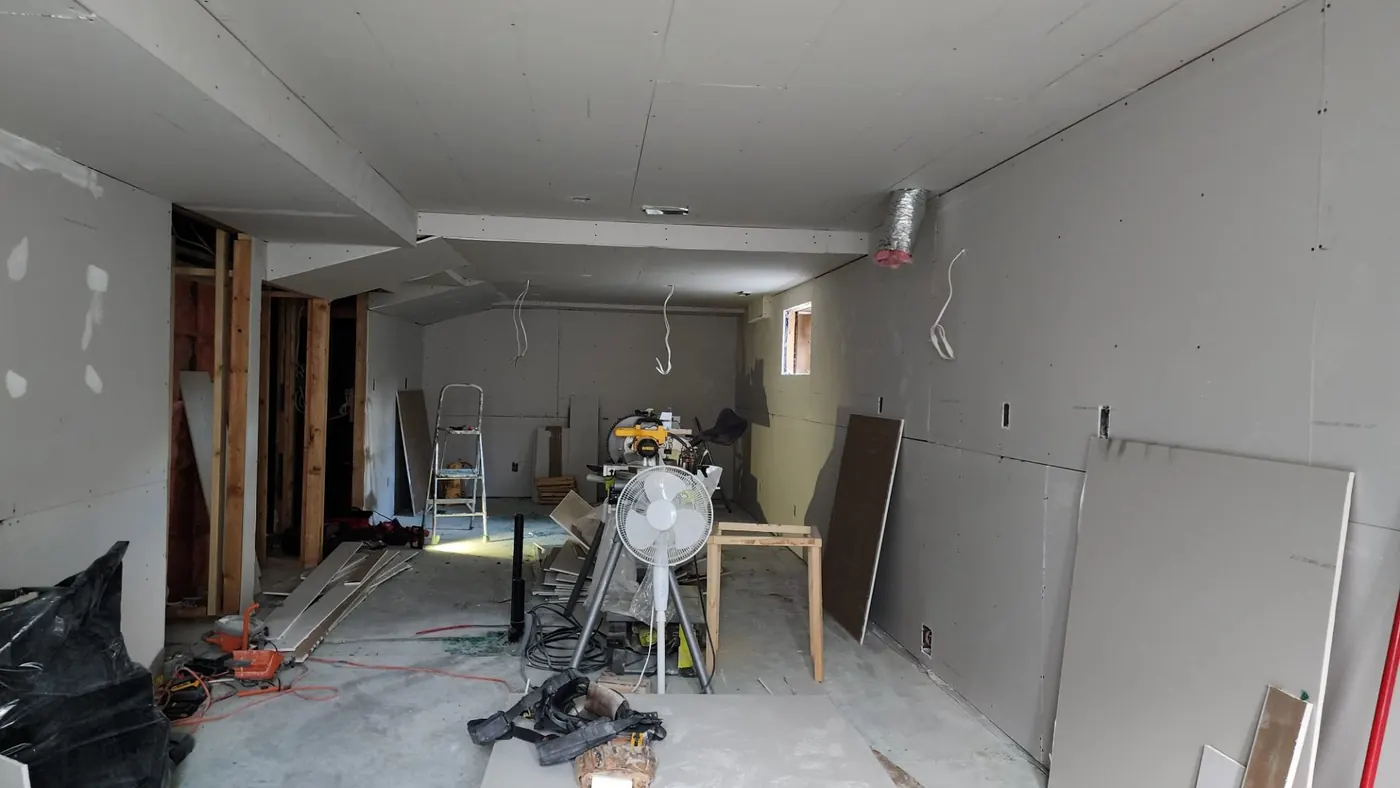
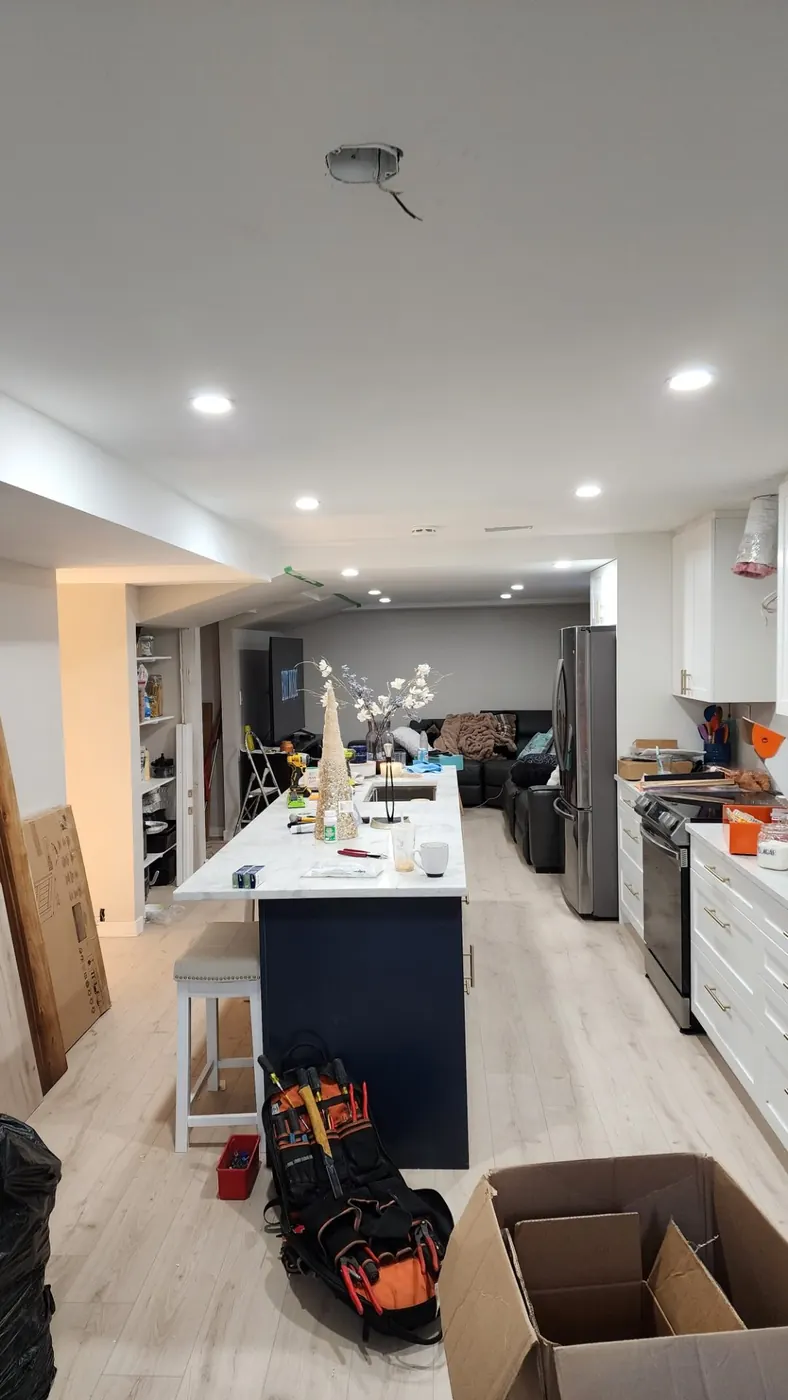
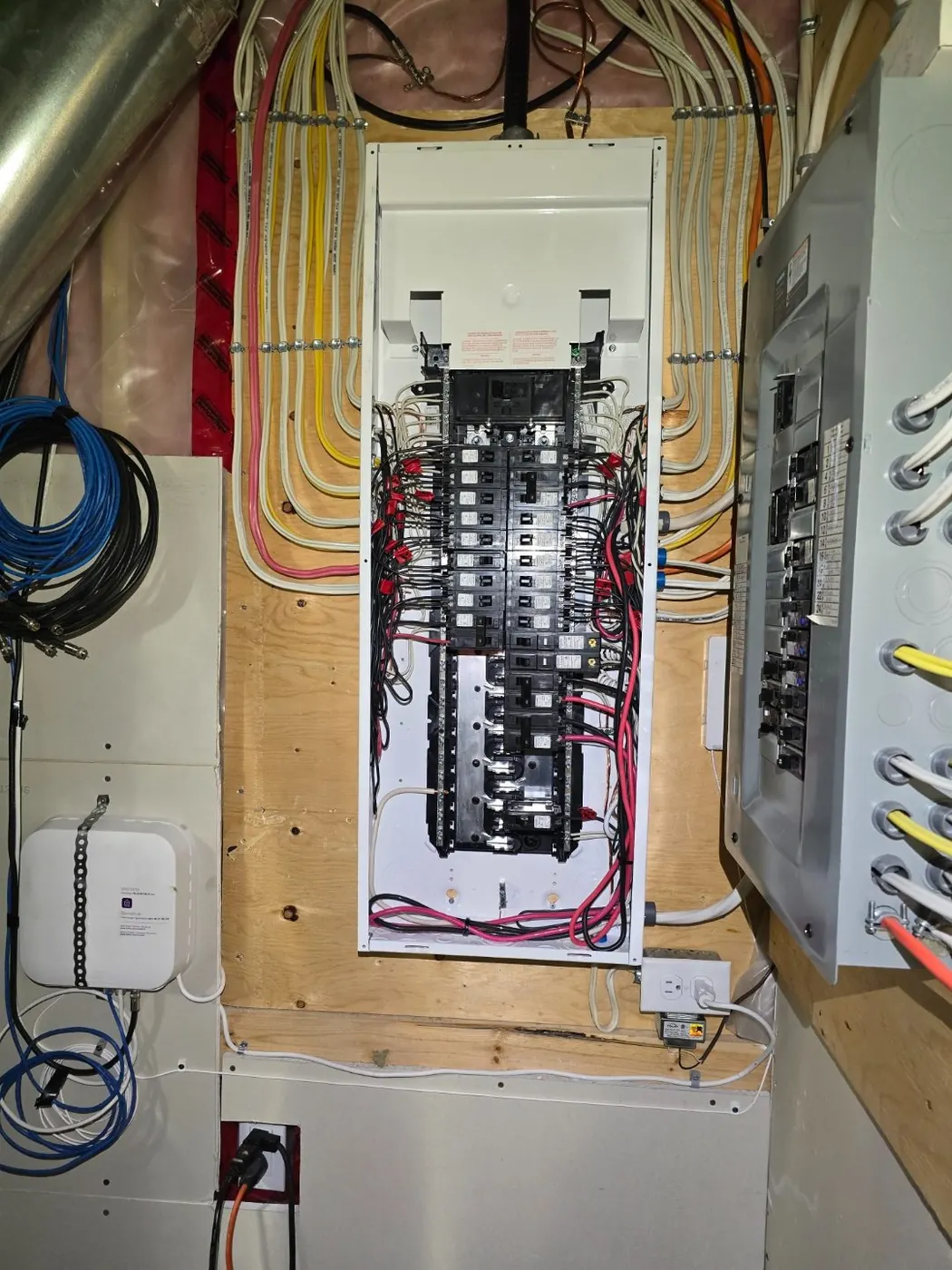
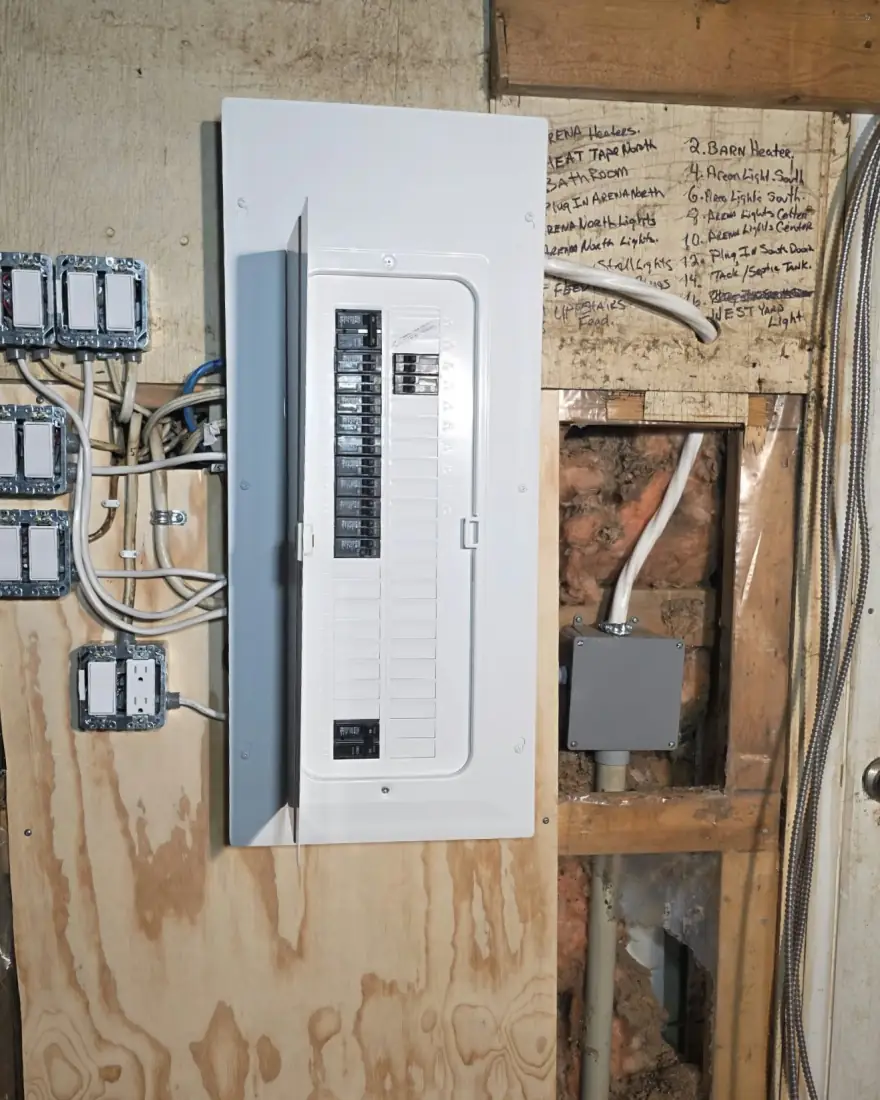
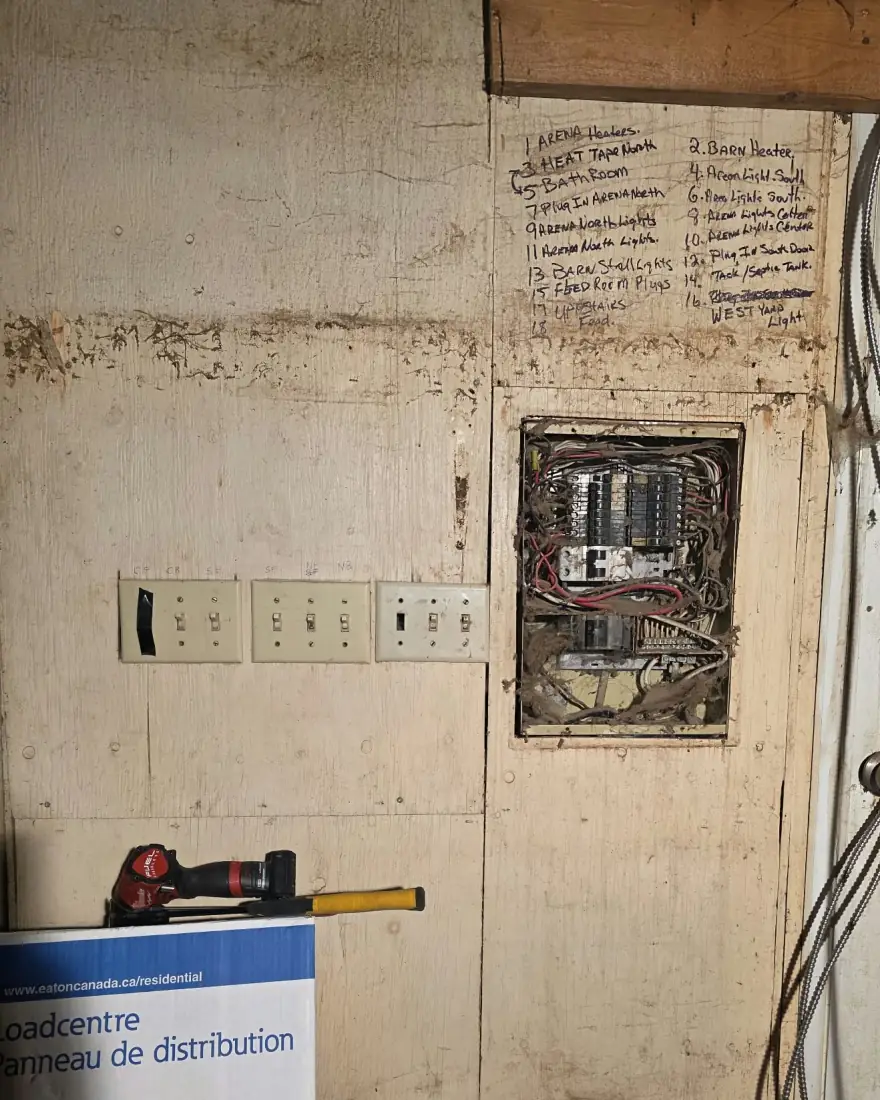
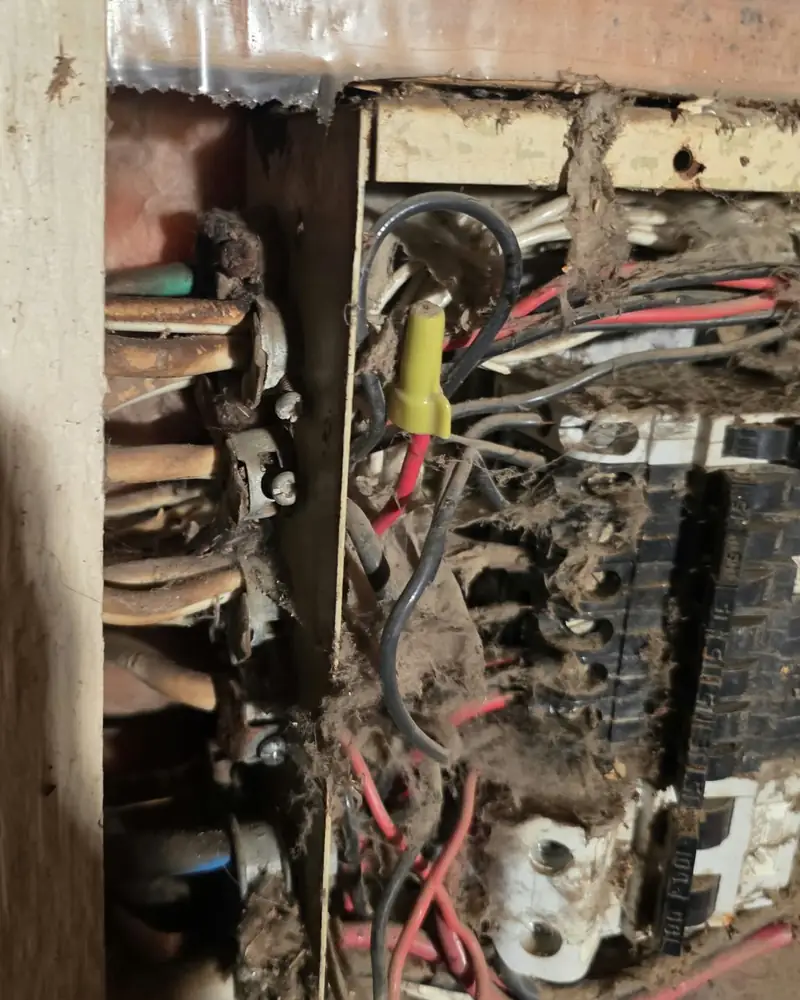
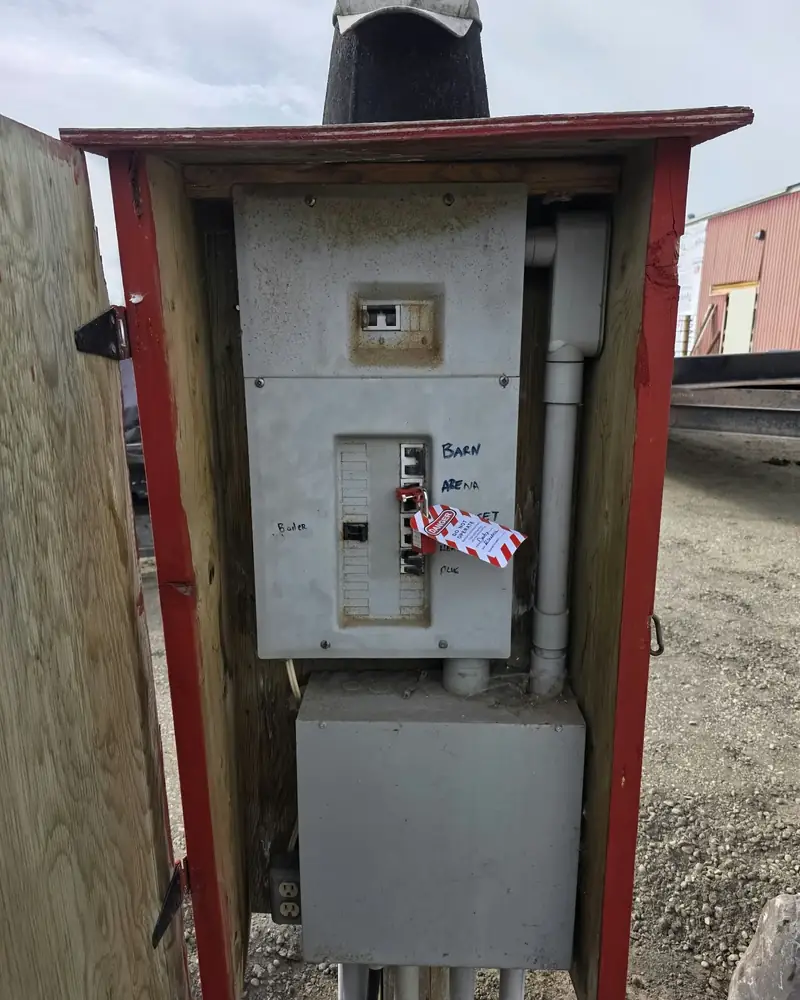
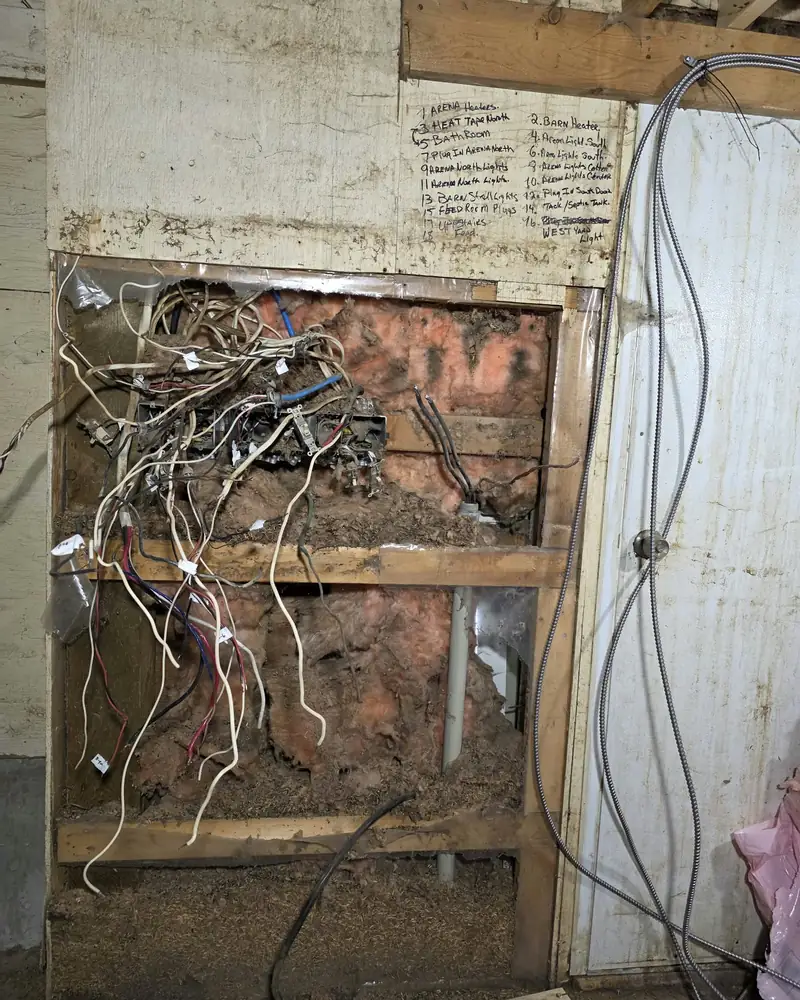
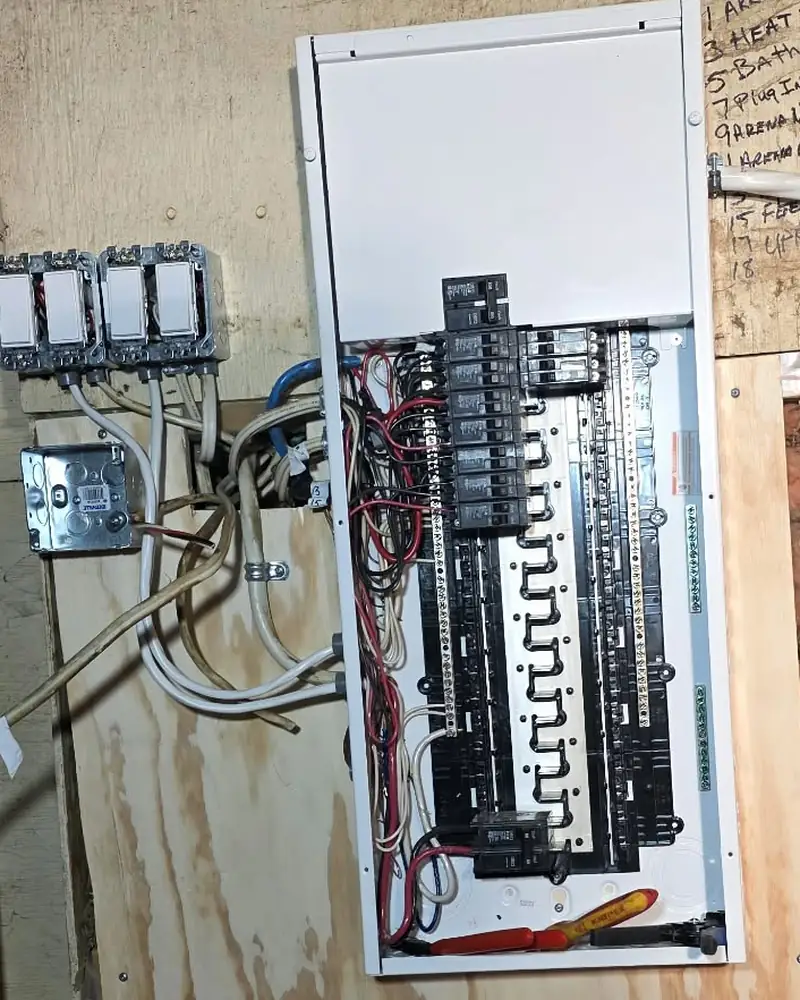
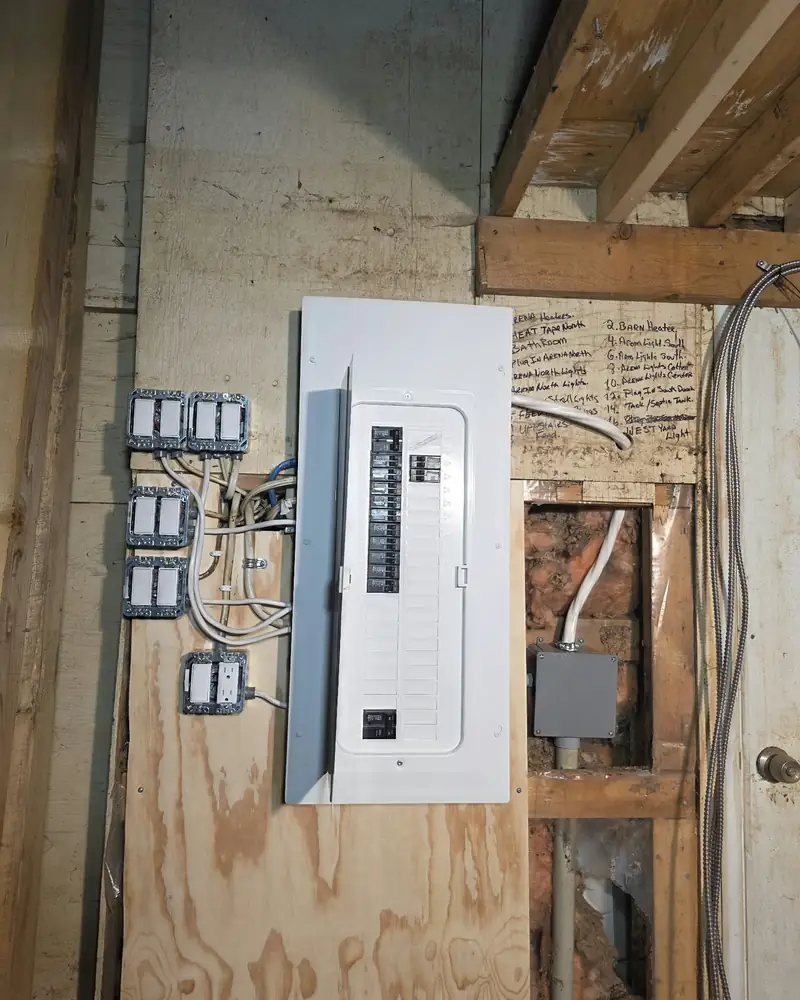
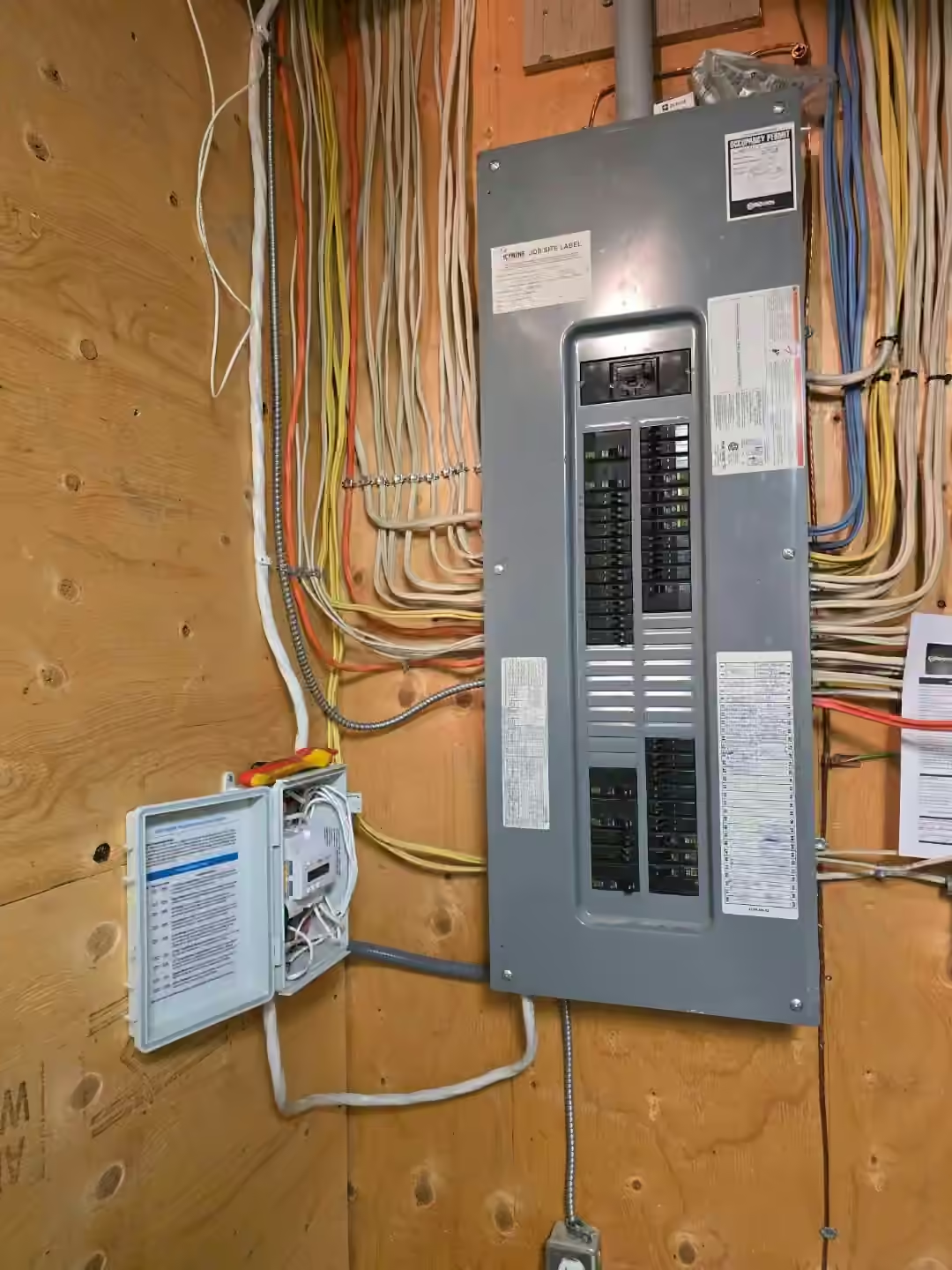
Panel and service work, photographed on the job


What Edmonton homeowners say
Real reviews from real Edmonton homes. Read them yourself.
Every quote below is verbatim from our Google Business Profile. Licensed, permitted, and inspection ready. Click through to verify any review yourself.
We had Dimitry to do all the electrical when we finished the basement for an in-law suite. When we had our final inspection we failed. We called Dimitry and told him and he showed up the next day to address the issues on the inspection report. He has made all the repairs required by the inspector and has offered to be here when the inspection is being done to ensure all is fine. We are very happy with the service.
We have used them on multiple projects and are very happy to say they are our Edmonton electricians!! They do great work and are very professional !
Before You Pay for a Full Panel Swap
A Bigger Panel Is Not Always the Answer
Lots of shops will quote you a full 200 amp service upgrade the second you mention an EV charger or a hot tub. Sometimes that is right. Often there is a cheaper, faster fix that does the same job. Here are the three roads, honestly laid out.
1. Load management
Best when: you are adding one big load and your panel is otherwise fine.
How load management actually works
Often the cheapest route. A load management device lets a big new load, like an EV charger, share your existing service safely. It backs off the charger for a moment if the house draws hard, so you never trip the main. Many homes add an EV charger on a 100 amp panel this way, no service upgrade needed. Typically the lightest cost of the three.
2. Add a subpanel
Best when: you are out of breaker space but not out of service capacity.
How a subpanel actually works
Your main panel is full of breakers but the service itself is big enough? A subpanel adds a bank of new circuits fed off the main, perfect for a garage, a shop, a basement suite, or a row of new loads. Cleaner and cheaper than swapping the whole service, and it keeps the garage on its own tidy panel.
3. Full service upgrade
Best when: multiple big loads, old service, or planning solar and an EV together.
What a 200A service opens up
The real deal when you genuinely need it. Going from 100 to 200 amp service opens the door to an EV charger, a heat pump, solar, and a hot tub all at once, with room to spare. It is the biggest job of the three, and worth every dollar when the house is truly maxed out. We size it for where you are headed, not just today.
Rough Ballpark
Every home is different, so treat these as a starting point, not a quote. We give you a firm number after a quick look.
Load management
the lightest cost
Subpanel add
the middle road
200A service upgrade
the full job
One Master Electrician looks at your panel and tells you straight which of the three you actually need. If load management does the job, that is what we will tell you.
Start With What You Have
Before you price an upgrade, find out what you already have.
Tap the age of your house. I will show you the box I usually open in one that age, and then the one number that actually settles it.
The era is my guess. The number on your main breaker is the answer, and you can read it yourself in about ten seconds.
- Open the door on the grey box. You are not touching anything inside, just reading.
- Find the biggest breaker. It usually sits alone at the top, sometimes at the bottom.
- Read the number stamped on its toggle. 60, 100, 125 or 200. That is your service.
On a fuse box there is no toggle to read, so look for the number on the main cartridge block or on the meter base outside. If you cannot find it, send me a photo and I will tell you for free.
The code floor: for a house of 80 m² or more, not counting the basement, the minimum is a 100 amp service. Under 80 m², 60 amps is still permitted. That is CEC Rule 8-200(1)(b).
Sources, checked 20 August 2026:City of Edmonton load calculation sheet, Rule 8-200(1)(a)Single dwelling worksheet, the 24 000 W and 14 400 W minimums
The Money
What the price covers
Which band you are in depends on whether the wire feeding the house has to change.
Bar length is the top of each band on one $12,000 scale. The only thing that decides which row you are in is whether the wire feeding the house has to change. I can tell you which one on the first visit.
Where your job lands
- $2,200 to $4,000. Panel swap, no service upsize. New box, new breakers, everything relabelled.
- $2,200 to $6,500 and up. Overhead service upgrade, usually 100 amp to 200 amp, meter base and mast included.
- Up to $12,000. Underground service where the supply cable has to be upsized and directional drilling is needed to reach the transformer.
In the number
- Permit pulled in your name, inspection booked, me standing there for it.
- Panel, breakers, labour, and every circuit traced and labelled on the new door.
- Drywall patched where I opened it, site left clean.
What moves it
- Whether the meter base and service entrance go too.
- Overhead or underground.
- Aluminum branch wiring, or knob and tube found once the cover is off.
If I find something behind the cover that changes the number, you hear it before I touch it. Not after.

What You Are Left Holding
A panel job is not finished until the paperwork clears
A panel or service change is permit work in Edmonton, not maintenance. The permit gets pulled under Master Electrician #13824 before anything comes off the wall, and an inspector signs the job, not us.
When we pack up you get the permit card, the inspection report, a photo of the new labelled directory, and a 1-year workmanship warranty on the labour. If the inspector wants something changed, we come back and change it. That has already happened and we showed up the next day.
Before & After
A panel job and a pot light job, start to finish
Drag the handle to see the before and after on real jobs we have done.
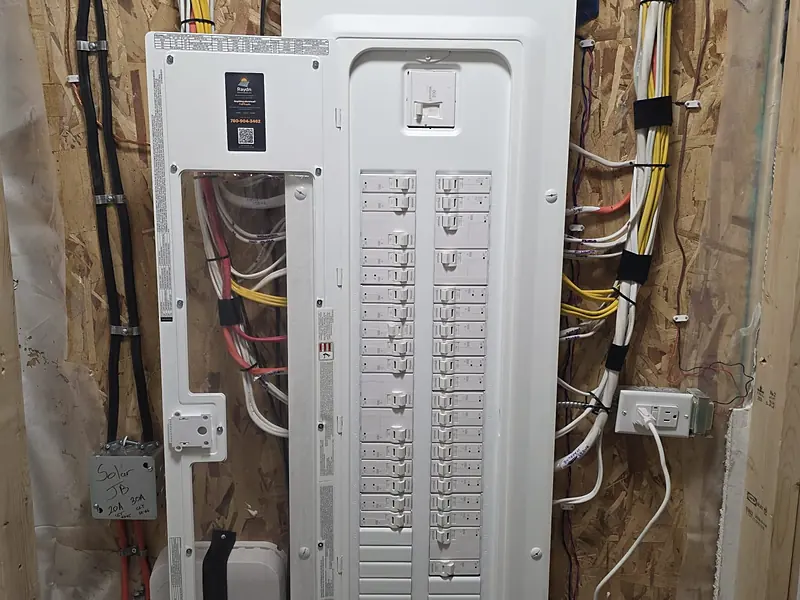
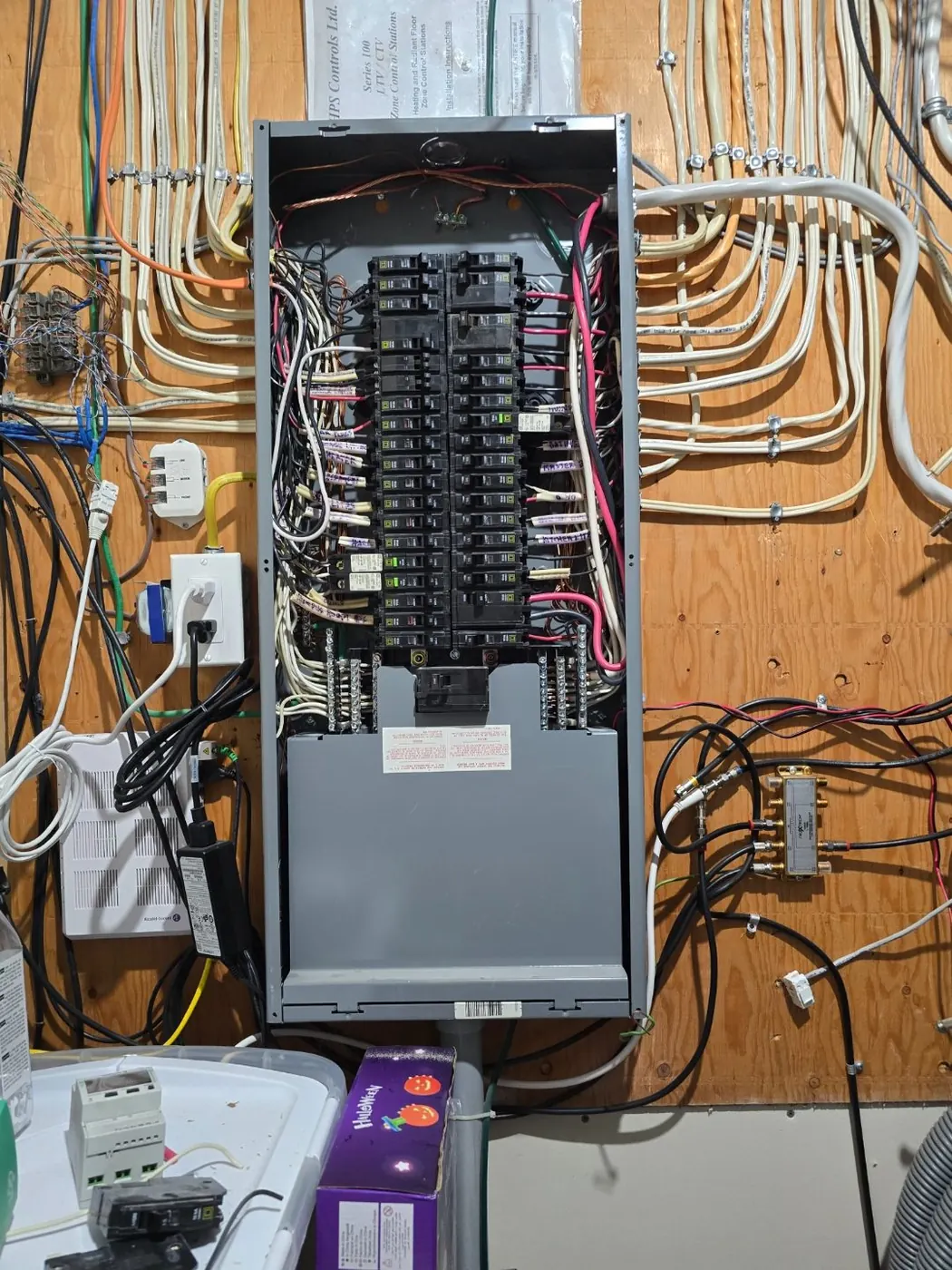
Panel Upgrade, Edmonton
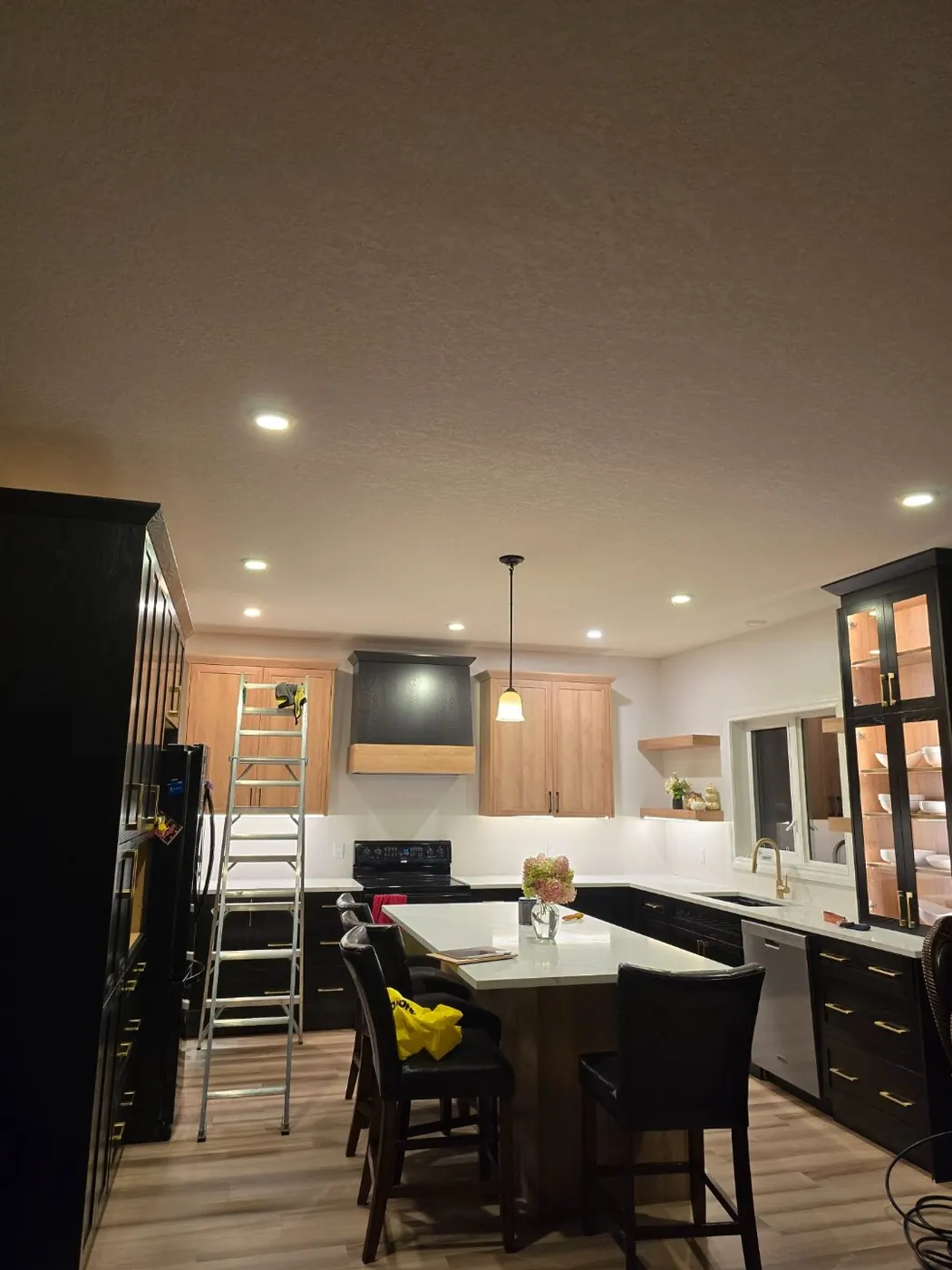
Pot Lights, Edmonton
While The Panel Is Open
The five things that come up on almost every panel job
Once the cover is off and the permit is open, this is the work that is cheap to do now and expensive to come back for.
That is the panel slice. Pot lights, hot tubs, smart switches and warehouse retrofits are all on the full list.
Every electrical service we offer →Questions
Panel upgrade questions I get every week
PermitIn your nameI pull it, book the inspection, and stand there for it
Power offMost of a working dayA second day only if the meter base goes too
200A for an EVNot alwaysA load calculation decides it, not a rule of thumb
Panel now, solar laterYesTell me and I leave the breaker space while it is open
A panel swap with no service upsize runs $2,200 to $4,000. Going 100 amp to 200 amp overhead runs $2,200 to $6,500 and up.
Underground, where the supply cable has to be upsized and directional drilling is needed to reach the transformer, it can reach $12,000. One flat number before work starts. See the three bands on one scale.
Most are a one day job. Old panel out, new one in, inspection booked around it. If the meter base or service entrance also has to go, it can run into a second day. I tell you which one you are looking at when I quote.
Yes, and it gets pulled in your name. I handle the paperwork, book the inspection, and I am on site when the inspector arrives. If someone offers to swap your panel without a permit, that becomes your problem with your insurer and when you sell.
Yes. Power is off while the panel is changed, so plan for most of a working day. If the utility has to disconnect at the pole, that window is on their schedule, so I confirm the date with them before I book you.
Not always. Plenty of Edmonton homes run a charger on 100 amp service once a load calculation is done, sometimes with a load management device instead. The calculation decides it, not a rule of thumb. I run it before I tell you to spend money.
Yes, and that is the right order if the panel is already tired. Tell me solar is coming and I will size the service and leave breaker space while the cover is off, so you are not paying twice to open the same box.
Worth Asking Before You Book
100A or 200A changes if solar is coming
Most homes do fine on 100A. If solar is on your list for the next few years, 200A and a panel with real breaker space left in it is the cheaper decision, and you only get to make it once. I would rather ask you now than sell you a second upgrade later.
One 200A scale. The upgrade buys you 100 more amps to work with. A 48A charger alone wants a 60A breaker, so a load calculation is what decides whether your 100A can carry it, not a rule of thumb. How the EV load calculation works.